
 EN
EN
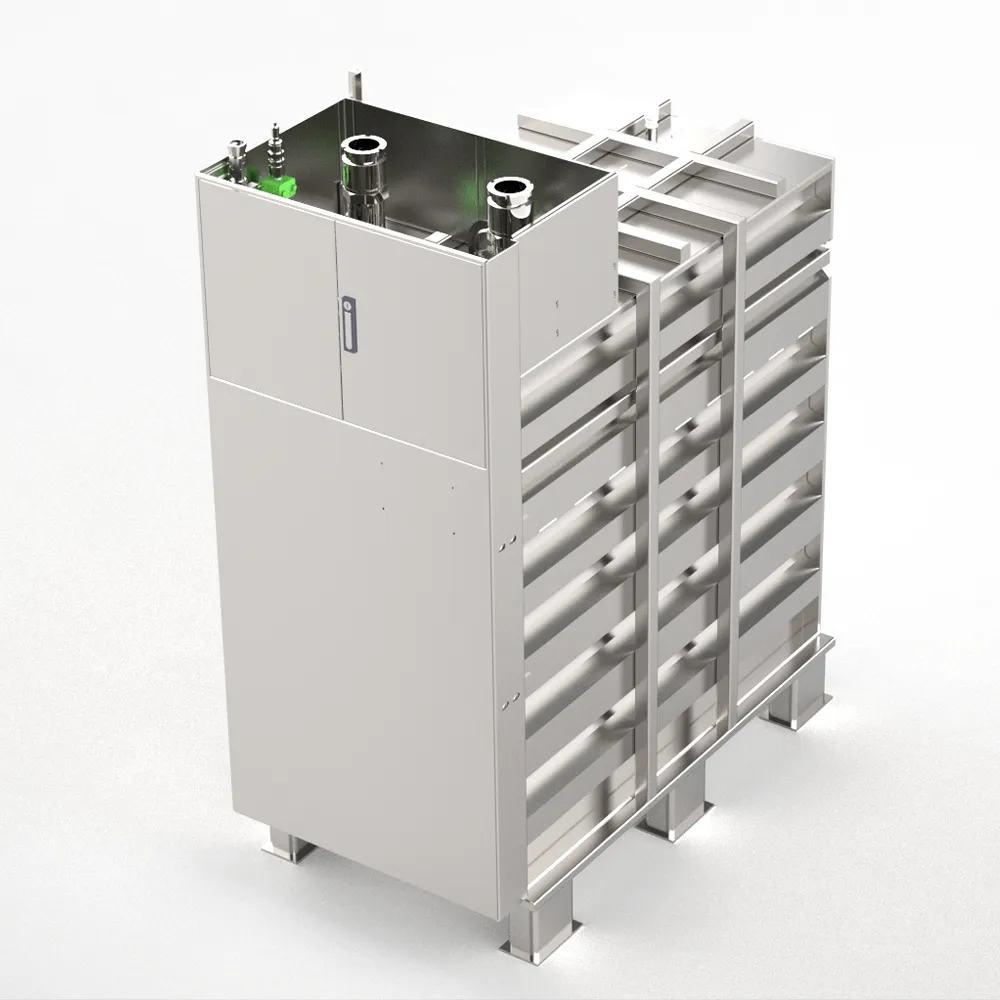
Inherent Safety Advantages of Metal Hydride Storage Over Conventional Methods
Pressure-Independent Hydrogen Containment via Chemical Binding
Metal hydride storage chemically binds hydrogen within its lattice structure, eliminating the need for high-pressure containment systems. Unlike compressed gas storage—which requires vessels rated for 700 bar—this approach operates at near-ambient pressures. Chemical bonding prevents sudden gas expansion, a critical failure mode in conventional tanks. For example, AB₂ alloys achieve stable hydrogen retention below 10 bar, avoiding carbon-fiber reinforcement requirements. The absorption-desorption cycle relies on controlled thermal input rather than pressure differentials, reducing mechanical stress. This intrinsic stability enables compact, shape-flexible designs ideal for space-constrained applications like electric vehicles, where high-pressure cylinders pose significant safety challenges.
Elimination of Explosion and Leak Risks Under Ambient Conditions
Solid-state hydrogen storage in metal hydrides eliminates explosion hazards by maintaining hydrogen in chemically bound form at room temperature. Unlike compressed gas systems—where valve failures cause rapid decompression—or liquid hydrogen—which continuously boils off—metal hydrides exhibit negligible leakage rates (studies indicate >99.9% annual retention). Their kinetic stability prevents spontaneous hydrogen release without deliberate thermal activation, a critical safeguard against accidental ignition. This passive safety is particularly valuable in confined spaces like residential energy systems, where leaked hydrogen could form combustible mixtures. Thermodynamic properties also create inherent fire suppression: during thermal incidents, endothermic decomposition absorbs excess heat while releasing non-flammable hydrogen at controlled rates.
Thermodynamic and Kinetic Foundations of Metal Hydride Safety
Reversible Hydride Formation and Controlled Dissociation Enthalpies
The safety of metal hydride hydrogen storage originates from its thermodynamic behavior. During absorption, hydrogen bonds exothermically with the host metal; during release, heat input triggers endothermic desorption. The enthalpy of hydride formation dictates the pressure–temperature equilibrium. Intermetallic compounds such as LaNi₅ and TiFe exhibit moderate dissociation enthalpies—typically between 25 kJ/mol H₂ and 35 kJ/mol H₂—meaning hydrogen is released only when a specific temperature threshold is exceeded. This inherent thermal threshold prevents accidental discharge: without a controlled heat supply, the hydrogen remains chemically bound in the solid matrix. As a result, systems maintain stable hydrogen storage at ambient conditions, eliminating the risk of runaway gas release seen in high-pressure tanks.
Kinetic Stability and High Activation Energy Barriers Preventing Uncontrolled Release
Kinetic barriers further reinforce safety. The transformation from metal hydride to metal and hydrogen gas requires overcoming activation energies typically exceeding 50 kJ/mol. At room temperature, these barriers slow the desorption rate to practically negligible levels—even if the container is breached. Hydrogen atoms must diffuse through the metal lattice and recombine at the surface—a process intrinsically slow without external heating. This kinetic stability means that a metal hydride storage module will not suddenly vent its hydrogen under mechanical or thermal stress below its designed activation temperature. Rapid, uncontrolled release would require both reaching the material’s dissociation temperature and supplying sufficient activation energy, creating a dual safeguard that complements thermodynamic equilibrium constraints.
Passive, Heat-Triggered Safety Mechanisms in Metal Hydride Systems
Endothermic Desorption as a Built-In Thermal Regulation and Fail-Safe Feature
Metal hydride storage systems incorporate intrinsic, passive safety mechanisms that activate automatically during thermal events. Unlike pressurized tanks that require active cooling systems, metal hydrides leverage the endothermic nature of hydrogen desorption. When temperatures rise, the chemical reaction absorbs significant heat to release hydrogen—effectively cooling the material itself. This self-regulating behavior eliminates catastrophic failure modes: higher temperatures accelerate hydrogen release, but the concurrent endothermic reaction suppresses further temperature escalation, keeping system pressure near ambient levels. No mechanical valves or electronic controls are needed for basic safety functions. The physics of endothermic desorption ensures that even during external fire exposure, hydrogen release rates remain inherently controlled—a fundamental advantage for safety-critical applications.
Material Selection for Safety-Critical Metal Hydride Applications
Comparative Safety Profiles: AB₂, AB₅, and Complex Hydrides (e.g., NaAlH₄)
Selecting the right metal hydride for a safety-critical system demands evaluating the stability and release behavior of each family. AB₂-type alloys (e.g., TiFe₂) offer moderate hydrogen capacity and low dissociation pressure, making them inherently stable under normal conditions. AB₅ alloys (e.g., LaNi₅) provide fast kinetics and high cycle life, but their moderate thermodynamic stability requires careful thermal management to prevent over-pressurization. Complex hydrides like NaAlH₄ store hydrogen chemically and release it only above 180 °C, offering a high safety margin because uncontrolled desorption is kinetically hindered by high activation energy barriers. The trade-off lies between capacity and control: AB₂ and AB₅ are suited for ambient-temperature use, while complex hydrides excel where passive, heat-triggered release is acceptable.
Corrosion Resistance, Air Stability, and Impurity Tolerance in Real-World Deployment
In industrial environments, material degradation due to moisture, oxygen, or trace gases (e.g., CO, H₂S) can compromise long-term safety. AB₅ alloys generally show good air stability and can be handled in ambient conditions without rapid oxidation. AB₂ alloys are more sensitive to impurities, often requiring high-purity hydrogen or protective coatings. Complex hydrides like NaAlH₄ demand an inert atmosphere during handling because they react exothermically with air. For real-world deployment, stainless steel containment and surface passivation layers improve corrosion resistance, while impurity-tolerant formulations reduce the risk of performance decay. Every material choice must balance intrinsic safety with practical robustness against real-world contaminants.
FAQ
What are the main safety advantages of metal hydride storage over traditional methods?
Metal hydride storage offers safer hydrogen containment due to its low-pressure, chemically bound configuration, which eliminates explosion and leakage risks. It operates at ambient conditions, avoiding the hazards of high-pressure or liquid hydrogen systems.
How does endothermic desorption improve safety in metal hydride storage systems?
Endothermic desorption absorbs heat during hydrogen release, acting as a self-regulating mechanism that prevents overheating and catastrophic events, such as explosive gas release or system failure.
Are metal hydrides suitable for use in confined spaces?
Yes, metal hydrides are ideal for confined spaces, as they exhibit negligible leakage rates and stable operation at room temperature, preventing combustible gas mixtures from forming.
What types of metal hydrides are best for safety-critical applications?
AB₂ and AB₅ alloys are best for ambient-temperature applications due to their moderate thermodynamic stability and rapid kinetics, while complex hydrides like NaAlH₄ excel in high-temperature, controlled-release scenarios.
What factors should be considered when deploying metal hydrides in industrial settings?
Corrosion resistance, air stability, and tolerance to impurities are key factors. Protective coatings, stainless steel containment, and impurity-tolerant formulations must be used to ensure long-term safety and functionality.
Table of Contents
- Inherent Safety Advantages of Metal Hydride Storage Over Conventional Methods
- Thermodynamic and Kinetic Foundations of Metal Hydride Safety
- Passive, Heat-Triggered Safety Mechanisms in Metal Hydride Systems
- Material Selection for Safety-Critical Metal Hydride Applications
-
FAQ
- What are the main safety advantages of metal hydride storage over traditional methods?
- How does endothermic desorption improve safety in metal hydride storage systems?
- Are metal hydrides suitable for use in confined spaces?
- What types of metal hydrides are best for safety-critical applications?
- What factors should be considered when deploying metal hydrides in industrial settings?