
 EN
EN
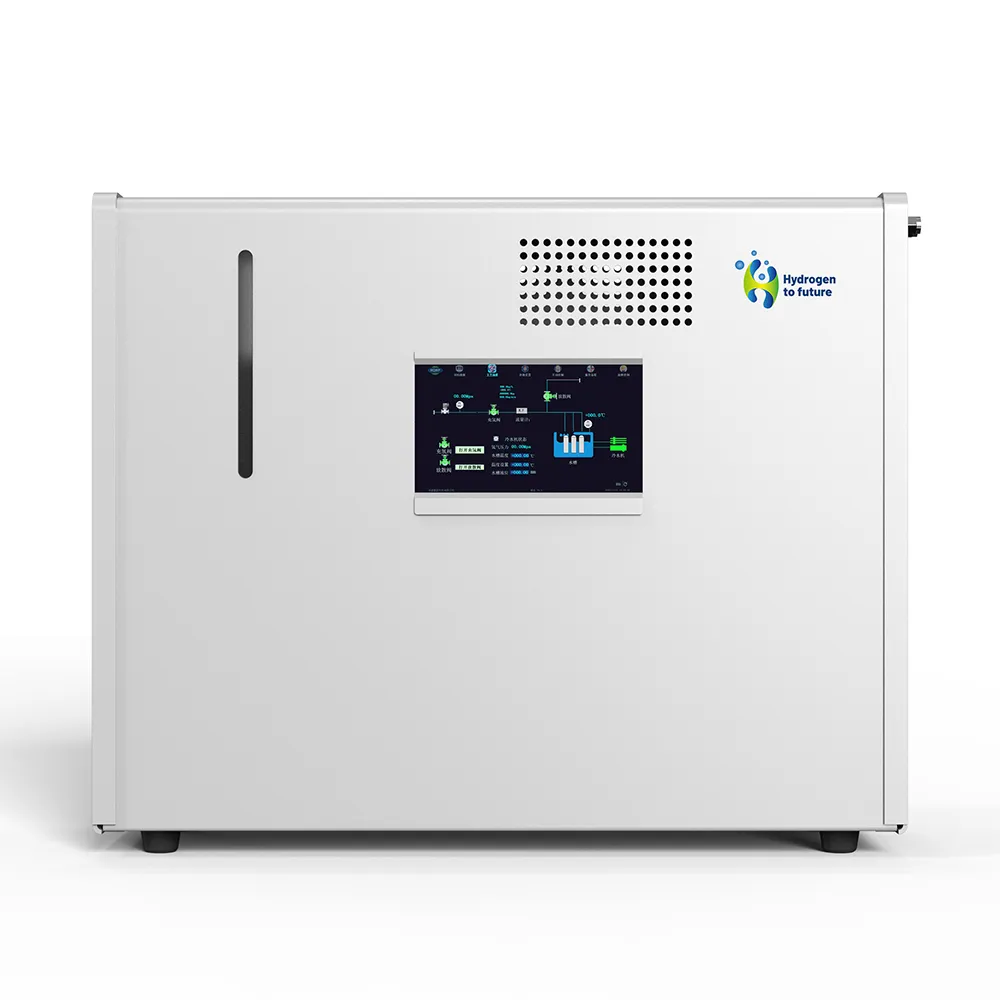
Hydrogen Safety and Storage Realities for Residential HPS
Material compatibility and containment risks in home environments
Storing hydrogen in a home demands rigorous attention to material compatibility. Hydrogen’s small molecular size enables it to permeate many metals and polymers, potentially causing hydrogen embrittlement—a degradation mechanism that renders structural materials brittle and prone to cracking under stress. In a residential HPS, tanks, piping, valves, and fittings must therefore be constructed from hydrogen-compatible materials such as ASTM-certified austenitic stainless steels (e.g., 316L) or carbon-fiber-reinforced composites designed for high-pressure gaseous storage. Even minor incompatibility can lead to micro-crack formation over time, increasing the risk of undetected leakage. Unlike natural gas, hydrogen is odorless, colorless, and non-toxic—making sensor-based detection essential. Because it forms flammable mixtures in air at concentrations as low as 4% by volume—and ignites with minimal energy—leak containment is especially critical in enclosed residential spaces. Solid-state storage using metal hydrides offers a lower-pressure alternative but introduces thermal management requirements: exothermic absorption and endothermic desorption must be carefully controlled to prevent unintended release. For homeowners, selecting equipment certified to ISO 15998, CGA G-13, or ASME BPVC Section VIII Division 3 is non-negotiable.
Ventilation, leak detection, and NFPA 55/NFPA 2 compliance essentials
Ventilation is the foundational safety measure for indoor hydrogen storage. Due to its low density and high buoyancy, hydrogen rises rapidly—so effective venting requires openings or mechanical exhaust systems positioned at the highest points of the enclosure to prevent accumulation near ceilings or in attic voids. Continuous, real-time leak detection is mandatory: fixed hydrogen sensors—calibrated specifically for H₂ and capable of detecting concentrations down to 0.5% LEL—must be installed near all potential leak sources, including tank manifolds, compression stages, and fuel cell inlets. These sensors should trigger automatic system shutdown and alarm activation per NFPA 72. Compliance with NFPA 55 (Compressed Gases and Cryogenic Fluids Code) and NFPA 2 (Hydrogen Technologies Code) is legally required and technically vital. NFPA 2, for instance, mandates mechanical ventilation rates of at least 12 air changes per hour in indoor hydrogen storage areas and requires all electrical equipment—including lighting, switches, and control panels—to be rated for Class I, Division 2 hazardous locations. These standards are not bureaucratic hurdles—they directly mitigate ignition risk, limit overpressure hazards, and ensure fail-safe response during fault conditions.
HPS Economics: Upfront Costs, Efficiency Losses, and Long-Term Value
Capital expenditure vs. lifetime operating costs of residential HPS
Residential HPS installations carry substantial upfront capital costs—typically $15,000–$25,000 before permitting, installation, and site preparation—driven by electrolyzer, pressurized storage, fuel cell, and balance-of-system components. Yet lifetime operating economics differ meaningfully from battery-centric alternatives. While lithium-ion systems typically degrade to 70–80% capacity within 5–10 years and require full replacement, hydrogen storage vessels and supporting infrastructure often exceed 20-year service lives with negligible capacity fade. Fuel cell stacks do require periodic replacement every 5–8 years at $2,000–$4,000 per cycle, but overall maintenance remains minimal: no routine electrolyte servicing, distilled water top-offs, or scheduled technician interventions. When factoring in avoided grid dependency, time-of-use arbitrage, and resilience premiums—especially in areas with frequent outages or restrictive net-metering—the total cost of ownership over two decades may rival or undercut comparable battery systems, particularly as green hydrogen production costs approach $3–$4/kg and system integration matures.
Round-trip efficiency analysis: electrolysis → storage → fuel cell → electricity
The round-trip efficiency of a residential HPS—converting grid or solar electricity into hydrogen and back into usable AC power—currently ranges from 30% to 40%. Losses accumulate across three primary stages: electrolysis (60–80% efficient, depending on stack type), compression and storage (5–10% parasitic loss for 350–700 bar systems), and fuel cell conversion (50–60% electrical efficiency). As a result, only about 3–4 kWh of usable electricity is recovered from every 10 kWh initially supplied. This falls significantly short of lithium-ion batteries, which achieve 85–95% round-trip efficiency. However, hydrogen’s value proposition lies not in short-term cycling but in long-duration energy retention: stored hydrogen experiences virtually zero self-discharge over weeks or months, whereas batteries lose 1–5% of charge daily. For off-grid homes, seasonal solar shifting, or applications where backup reliability carries high economic or safety value—such as medical equipment support or wildfire-prone regions—the ability to retain energy indefinitely can offset lower round-trip efficiency and improve overall system-level energy utility.
Regulatory Pathways and Grid Integration for Home HPS
Local permitting, utility interconnection policies, and ASME B31.12 adoption status
Deploying a residential HPS involves navigating fragmented regulatory terrain. Most local jurisdictions lack dedicated hydrogen ordinances and instead rely on analog frameworks—such as natural gas piping codes (NFPA 54), chemical storage regulations, or fire department hazardous materials rules—creating uncertainty and inconsistent enforcement. On the utility side, interconnection policies remain underdeveloped: many utilities treat fuel-cell-generated electricity as distributed generation but impose additional technical studies, export limits, or deny net-metering eligibility due to concerns about round-trip inefficiency and grid stability impacts. Critically, ASME B31.12—the only U.S. consensus standard covering design, fabrication, and testing of hydrogen piping systems for residential and light commercial use—has yet to achieve broad adoption at the state or municipal level. Before procurement, homeowners must confirm whether their local authority having jurisdiction (AHJ) recognizes B31.12—or an equivalent like CSA CHMC 2021—and whether their utility permits bidirectional interconnection for fuel-cell systems under IEEE 1547-2018. Early coordination with both entities is essential to avoid costly redesigns or project delays.
FAQ
What materials are suitable for hydrogen storage in residential settings?
Materials such as ASTM-certified austenitic stainless steels (e.g., 316L) and carbon-fiber-reinforced composites designed for high-pressure gaseous storage are recommended due to their compatibility with hydrogen.
Why is real-time leak detection critical for home hydrogen storage?
Hydrogen is odorless, colorless, and highly flammable, and it can form explosive mixtures with air at low concentrations. Real-time leak detection ensures immediate response to reduce ignition and overpressure risks.
How does the efficiency of hydrogen power systems compare to lithium-ion batteries?
Residential HPS round-trip efficiency is 30–40%, significantly lower than lithium-ion batteries, which achieve 85–95%. However, hydrogen systems excel in long-term energy retention without self-discharge over weeks or months.
Are hydrogen systems compliant with national standards?
Yes, compliance with standards such as NFPA 55, NFPA 2, ISO 15998, and ASME B31.12 is essential for safety and regulatory approval in residential hydrogen systems.