
 EN

When Does Hydrogen Storage Make Sense for Renewable Energy Curtailment?
Hydrogen solar energy storage is not the automatic answer whenever a wind or solar plant is curtailed. It becomes a serious option when surplus power is frequent, long-lived, and valuable enough to serve a use beyond a few hours of electricity shifting. For project teams, the useful question is not “Can we make hydrogen?” but “What recurring mismatch between generation, grid access, and demand would hydrogen solve better than alternatives?”
From a clean-energy planning perspective, that distinction matters. A battery may be the more efficient response to a short evening peak or a four-hour congestion event. Hydrogen solar energy storage can be more compelling when the project needs to move energy across days, weeks, or seasons; supply a local industrial or mobility load; or create resilience for a microgrid that cannot rely on the grid at every critical moment.
Start With the Curtailment Pattern, Not the Electrolyzer
First, quantify curtailment at the point where it occurs. Separate occasional negative-price events from a persistent operating pattern caused by interconnection limits, transmission congestion, or generation that regularly exceeds local demand. A project with a handful of isolated hours may not justify a dedicated hydrogen asset. A project with predictable blocks of excess renewable output has a different planning problem.
Look at four measurements together: curtailed MWh by month, consecutive hours of surplus, seasonal concentration, and the confidence that the surplus will remain after future grid upgrades. This prevents a common mistake: sizing an electrolyzer around an annual total that is actually scattered across too few operating hours. Hydrogen production from renewable energy sources needs enough usable run time and a credible electricity supply profile, not simply a large annual curtailment number.
A practical screening rule is to model several cases: today’s curtailment, a conservative future case with less curtailment, and a high-renewables case with more. If hydrogen solar energy storage only works in the most optimistic case, it is a concept to monitor rather than a project ready for procurement.
Match Storage Duration to the Value You Need
Storage duration changes the comparison. Research on renewable-curtailment reduction indicates that the first few hours of storage can capture a large share of avoided-curtailment benefit in many systems. That is why batteries, demand response, and flexible interconnection arrangements should remain in the comparison. They can preserve electricity value with fewer energy conversions.
Hydrogen solar energy storage earns further evaluation when the time gap is longer than a typical battery duty cycle or when the stored energy has a direct hydrogen use. Hydrogen can be stored for extended periods and moved into fuel, feedstock, heat, backup-power, or microgrid applications. This flexibility is valuable, but it does not remove conversion losses. A U.S. Department of Energy discussion of hydrogen long-duration storage uses an illustrative round-trip electricity-to-electricity efficiency of roughly 35%. If the only plan is to turn hydrogen back into power after a short interval, the efficiency penalty deserves close attention.
In other words, do not compare technologies by a single nameplate number. Compare the delivered service: hours of firm power, kilograms of hydrogen at a required pressure or purity, resilience duration, and the ability to shift renewable value across the actual gap in the project’s energy balance.
Check Whether There Is a Real Hydrogen Load
Projects are generally stronger when they have a destination for hydrogen that does not require immediate reconversion to electricity. A nearby industrial user, fleet fueling plan, process demand, or planned hydrogen hub can turn curtailed electricity into a product rather than a round trip. This is where hydrogen production from renewable energy sources may align electricity management with a commercial offtake pathway.
Be specific about the load. Is demand steady or seasonal? Can it accept variable production? What delivery pressure, storage buffer, purification, compression, and safety systems are required? Is the buyer prepared to contract for volumes that vary with renewable availability? A claimed hydrogen demand without these operating details is not yet an offtake case.
For sites exploring integrated infrastructure, a Hydrogen microgrid integrated solution can provide a useful discussion point for mapping generation, storage, and load interfaces. The right configuration still depends on site-specific boundaries, controls, and acceptance criteria.
Test Grid, Water, Land, and Operating Constraints Together
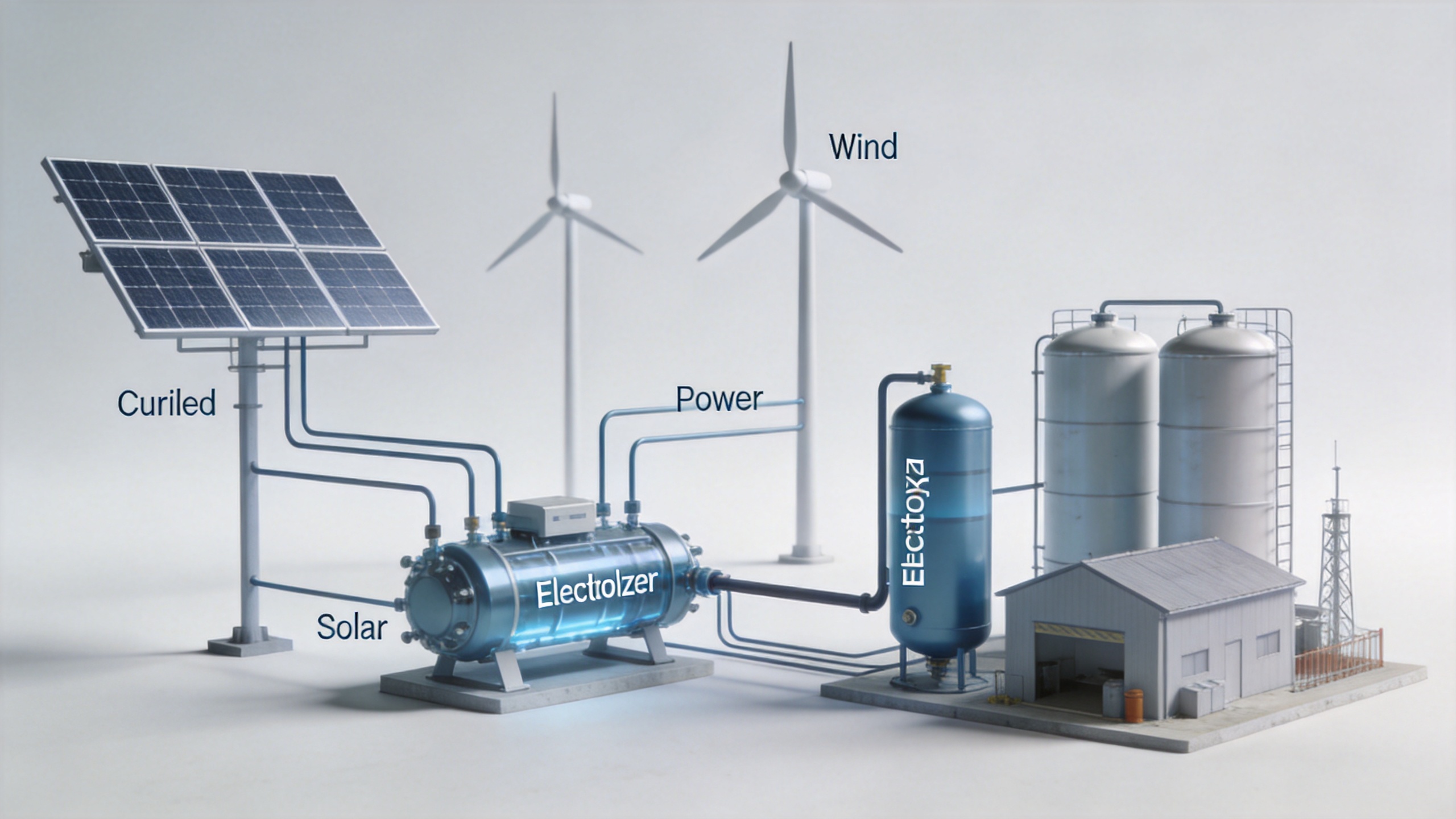
Hydrogen solar energy storage is a system decision. The electrical connection must support the chosen operating mode, including power-quality requirements, ramping behavior, protection coordination, and the ability to consume surplus energy when it appears. Water availability and treatment requirements also need confirmation early, as do compression power, thermal management, storage footprint, transport access, and local permitting.
One point is often missed: low-cost curtailed electricity does not automatically mean low-cost hydrogen. The full cost includes the electrolyzer, balance-of-plant equipment, storage, controls, civil works, maintenance, and the utilization achieved under the actual surplus profile. A low utilization rate can dilute the benefit of cheap electricity. Conversely, an asset that can operate on curtailed renewable power and other qualified low-carbon power may have a more stable utilization case, subject to the project’s certification and contractual rules.
For multi-use designs, Hydrogen energy capsules may help teams discuss modular storage and delivery boundaries. They should not be treated as a substitute for a complete safety, logistics, and operating study.
Use a Side-by-Side Decision Framework
| Question | Hydrogen may fit when... | Consider alternatives first when... |
|---|---|---|
| Surplus duration | Excess energy persists across multi-day or seasonal periods. | Curtailment is mostly short and intraday. |
| End use | There is a credible direct hydrogen demand or resilience need. | The only value is rapid electricity arbitrage. |
| Utilization | Operating hours support a defensible electrolyzer utilization case. | Annual curtailed energy is fragmented into rare events. |
| Site readiness | Grid interface, water, storage, land, permits, and safety work can progress together. | Critical site constraints remain unknown. |
The comparison should include batteries, flexible demand, grid upgrades, curtailment-management contracts, and other power-to-X options. Hydrogen solar energy storage is most credible when it fills a service gap that those options do not address as well.
A Practical Next Step for Project Teams
Before choosing equipment, build a time-series model that combines renewable output, curtailment, tariff or market value, grid constraints, hydrogen demand, and storage duration. Then test the project against conservative assumptions. The output should show not only total hydrogen production, but also the hours in which it is produced, the service it delivers, and which assumptions drive the economics.
Hydrogen solar energy storage makes sense when renewable curtailment is recurring, the storage need extends beyond short-duration shifting, and the hydrogen can serve a defined energy or product role. When those conditions are not yet present, the better result may be a phased study: reduce short-duration curtailment first, preserve site optionality, and revisit hydrogen as renewable penetration, offtake, and grid conditions evolve.