
 EN
EN

Solid-State vs Compressed Hydrogen Storage: A Practical Comparison
When a project team asks whether to keep hydrogen in solid form or use compressed gas, the useful answer is rarely a single technology verdict. The practical answer comes from the duty cycle, available utilities, footprint, delivery pressure, safety case, and the connection between storage, production, and end use. For B2B buyers, hydrogen in solid form is more accurately understood as materials-based storage—not elemental hydrogen frozen into a solid phase.
As a hydrogen technology adviser would frame it, compare the whole system instead of comparing one vessel specification. Compressed storage can be direct and familiar where high-pressure gas is already required. A system designed to hold hydrogen in solid form can change the pressure and thermal-management trade-off, but it also introduces material handling and heat-integration questions that must be verified for the actual project.
Start with the correct definition of hydrogen in solid form
In practical storage discussions, hydrogen in solid form usually means hydrogen stored on or within a solid material. The U.S. Department of Energy describes two broad mechanisms: adsorption on the surface of a solid and absorption within a solid. Metal hydrides, chemical storage media, and sorbent materials are different routes within that broader family. They do not share one universal operating pressure, temperature window, capacity, or discharge profile.
This distinction matters because a search for hydrogen in solid form can also return information about physical solid hydrogen at extremely low temperatures or extreme pressures. That is a different subject from the engineered storage systems normally evaluated for stationary energy, backup power, or industrial hydrogen projects. A procurement brief should therefore state the storage mechanism and the required hydrogen delivery conditions before comparing suppliers.
How compressed hydrogen storage works
Compressed storage keeps hydrogen as gas in pressure vessels, with associated valves, piping, pressure regulation, detection, ventilation, and controls. It is often attractive when the downstream user needs gaseous hydrogen at a compatible pressure and the project can accommodate the vessel bank and its safety zoning. The U.S. Department of Energy notes that advanced compressed-gas vessels in near-term applications can reach 700 bar; that figure is context, not a requirement for every installation. Many industrial designs operate at other pressure levels based on process demand.
Its practical appeal is direct operation: compression, storage, pressure control, and delivery follow a familiar path. The central constraint is that the pressure boundary becomes a major part of the project. Teams must evaluate vessel placement, inspection access, gas detection, pressure-relief routing, transport rules, and the energy used for compression. Where frequent fast refilling or high delivery pressure is decisive, compressed gas may be the practical baseline.
How a hydrogen in solid form system changes the trade-off
A hydrogen in solid form system uses a material to take up and release hydrogen under defined conditions. Depending on the material pathway, charging and discharging may require heat removal, heat input, or carefully managed temperature control. This can make hydrogen in solid form appealing when a site has usable waste heat, a predictable discharge schedule, or a strong preference for lower-pressure storage architecture. It can be less attractive when the project needs rapid, highly variable throughput without suitable thermal integration.
Material-based storage should not be described as automatically safer, smaller, or cheaper. The safety case changes rather than disappears. A complete review still considers hydrogen detection, enclosure design, relief strategy, controls, material degradation behavior, maintenance procedures, and credible abnormal operating scenarios. The real question is whether the operating envelope of hydrogen in solid form matches the site better than a compressed-gas envelope.
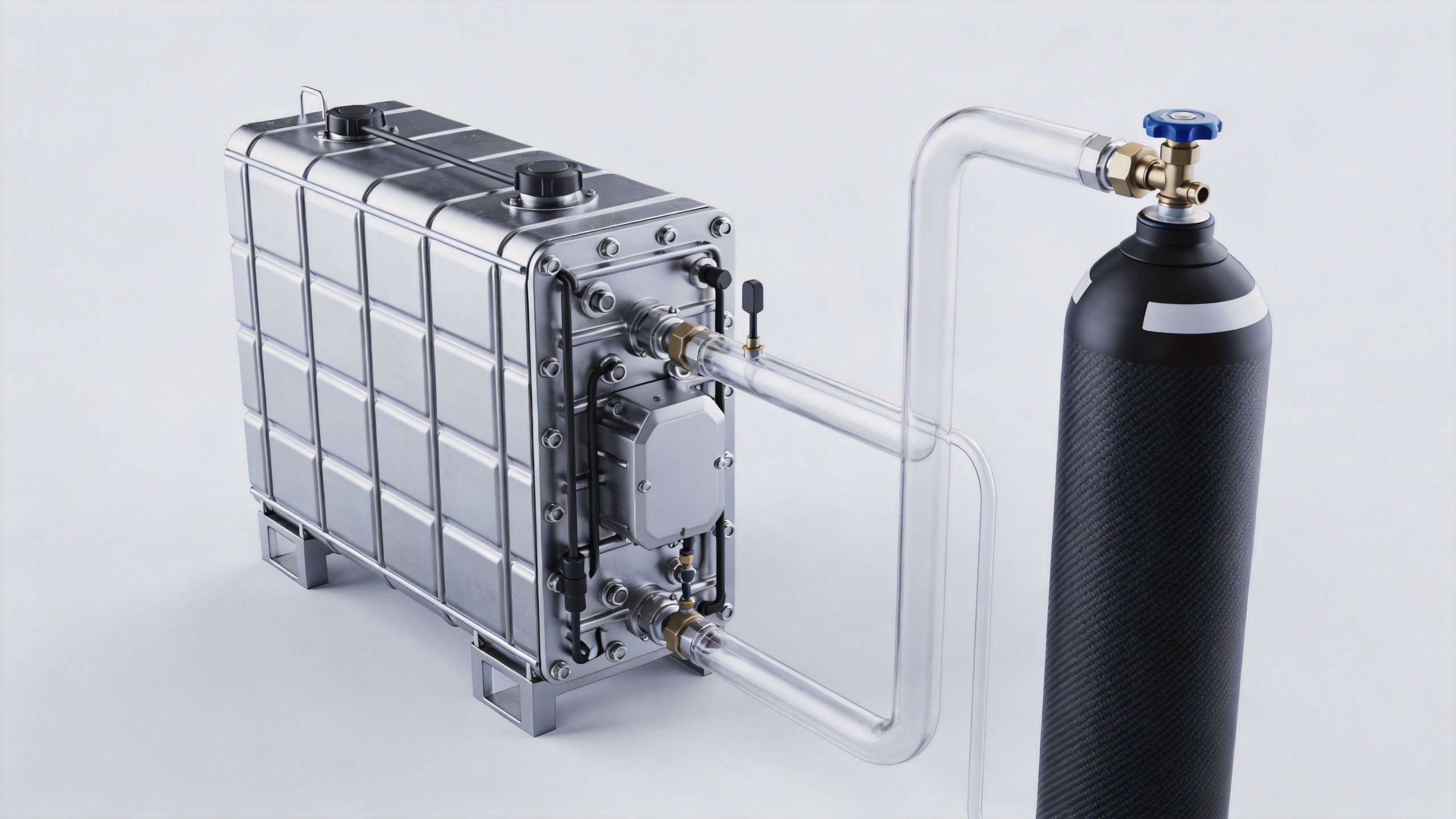
Practical comparison for project evaluation
| Evaluation area | Hydrogen in solid form | Compressed hydrogen |
|---|---|---|
| Storage principle | Hydrogen is adsorbed or absorbed in a solid storage medium. | Hydrogen remains gaseous inside a pressure vessel. |
| Key integration issue | Heat management, material cycling, and charge/discharge conditions. | Compression, pressure containment, and gas regulation. |
| Typical operating pattern | Predictable cycles or applications where thermal integration can be engineered. | Applications needing straightforward gas delivery or flexible high-pressure supply. |
| Procurement evidence to request | Operating envelope, cycling data, thermal balance, maintenance plan, and degradation assumptions. | Pressure rating, vessel documentation, compression duty, inspection plan, and relief design basis. |
The table is a screening tool, not a substitute for engineering. A project that chooses hydrogen in solid form should confirm the usable hydrogen quantity at its actual ambient conditions, the required heat source and sink, ramp-rate expectations, and the effect of repeated cycling. A compressed-gas project should confirm actual delivery pressure, compression energy, vessel footprint, refilling workflow, and the separation distances required by the applicable codes.
Where each route can fit
Compressed gas is often a strong candidate for mobile interfaces, intermittent demand, test facilities, or projects where gas handling infrastructure is already established. It may also simplify expansion when the next storage bank can be added in modular increments. The decision still depends on available space and the project’s high-pressure design basis.
Hydrogen in solid form can merit detailed evaluation for stationary applications with repeatable energy schedules, constrained safety boundaries, or a usable thermal source. It can also be relevant where the system is designed as part of a wider hydrogen-energy package rather than as an isolated tank. In each case, the material and system supplier should demonstrate performance at the proposed charge and discharge conditions rather than only at laboratory reference conditions.
A buyer’s checklist before selecting a storage route
- Define the required hydrogen quantity, delivery pressure, purity, and discharge duration.
- Map production variability and the expected number of storage cycles per week or year.
- For hydrogen in solid form, request a thermal balance and cycling assumptions for the proposed operating window.
- For compressed gas, request compression power, vessel layout, pressure-relief, and inspection information.
- Compare installed cost and operating cost across the complete balance of plant, not only the storage medium or vessel.
- Review controls, alarms, maintenance access, code compliance, and the site-specific safety assessment with qualified engineers.
Choosing the next technical step
For a consideration-stage decision, the most productive next step is a site data sheet rather than a generic technology ranking. It should capture production rate, demand profile, ambient conditions, available heat, permitted footprint, target delivery pressure, and expansion plan. That information makes it possible to assess whether hydrogen in solid form or compressed storage produces the more workable system boundary.
Hyto Energy Company Limited supports B2B hydrogen projects with storage-pathway and system-interface discussions. For teams assessing a modular storage configuration, review the Medium hydrogen storage unit as a starting point for a technical conversation. Any final selection should be validated against the project’s confirmed operating conditions, applicable standards, and commissioning plan.