
 EN

Renewable Energy Storage Solutions: How to Evaluate Hydrogen Integration
Renewable energy storage is no longer a single-technology decision. For project owners balancing variable solar or wind production with firm demand, batteries may solve short-duration volatility, while hydrogen can add a different capability: moving energy across longer gaps and across energy carriers. The right question is not whether hydrogen replaces batteries. It is whether hydrogen integration improves the renewable energy storage system for a defined load profile, operating horizon, and commercial use case.
For B2B teams, a useful assessment starts with the entire chain: renewable power, electrolysis, hydrogen storage, reconversion or end use, controls, safety, and expansion options. This guide provides a practical comparison framework for evaluating that chain without assuming that every site needs the same architecture.
Start with the storage problem, not the equipment
Renewable energy storage separates energy production from energy use in time. Before selecting hydrogen equipment, map the mismatch the project must solve: minutes of ramping, daily solar shifting, multi-day weather events, seasonal surplus, or a need to supply fuel as well as power. A battery-oriented system can be well suited to fast-response and intraday duty. Hydrogen becomes more relevant when the project needs to preserve a large renewable surplus for longer periods, serve a microgrid, or use hydrogen directly in an industrial process.
Define the baseline with measured intervals rather than annual averages. Review generation curtailment, load criticality, required autonomy, grid import constraints, and the value of unserved energy. This keeps renewable energy storage decisions tied to the actual operating problem instead of a generic technology comparison.
Evaluate the end-to-end hydrogen pathway
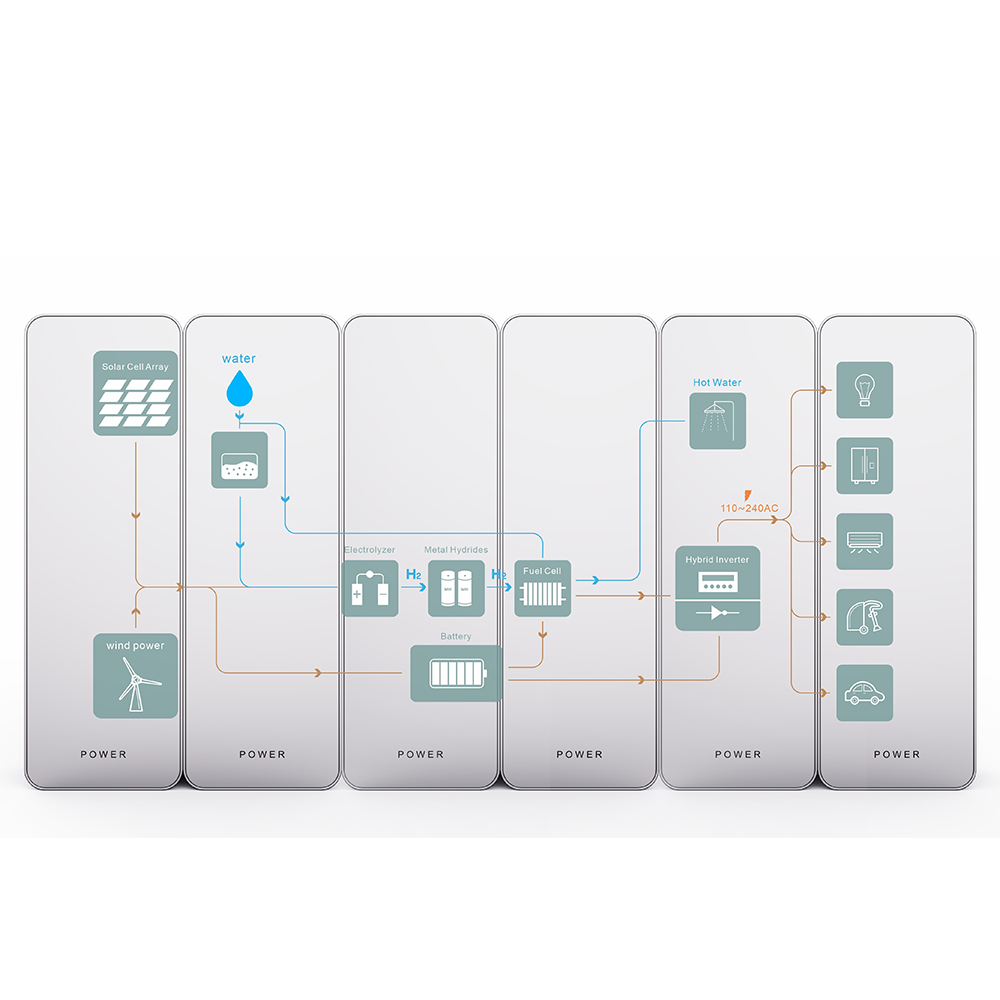
Hydrogen integration should be assessed as a chain, because each handoff affects availability, cost, and controllability. The core pathway is renewable electricity to electrolyser, hydrogen conditioning and storage, then either direct hydrogen use or conversion back to electricity. If the project needs electricity after storage, assess the reconversion technology and its expected duty cycle. If hydrogen is consumed on site, assess purity, pressure, delivery timing, and demand flexibility instead.
| Assessment area | Questions to test | Why it matters |
|---|---|---|
| Renewable input | How variable is generation, and how often is surplus available? | Determines electrolyser utilisation and the scale of storage needed. |
| Electrolysis | What operating range, ramping behaviour, water treatment, and maintenance plan are required? | Links variable power to hydrogen output and operating resilience. |
| Storage route | What pressure, footprint, duration, safety zoning, and logistics constraints apply? | Sets the practical long-duration capacity and site design. |
| End use | Is hydrogen reconverted to power, used as process feedstock, or prepared for a carrier pathway? | Changes the economics and the performance metric that matters. |
| Controls | How will dispatch coordinate renewables, battery assets, grid exchange, and hydrogen equipment? | Prevents independent assets from working at cross-purposes. |
Current market context supports taking this systems view. The IEA reported 2 GW of global water-electrolysis capacity in 2024, with more than 1 GW added through July 2025. That growth does not guarantee project performance, but it makes supplier maturity, interface definition, and serviceability increasingly important procurement criteria.
Compare hydrogen and batteries by role, not by headline efficiency
Round-trip efficiency is important, but it is not the only decision variable. A renewable energy storage portfolio can use batteries for fast response and frequent cycling while reserving hydrogen for longer-duration energy, resilience, or direct fuel demand. Comparing technologies only on one efficiency figure can hide the value of duration, energy capacity, siting, and cross-sector flexibility.
Create a scenario matrix with at least three cases: normal daily operation, a prolonged low-generation period, and a high-surplus period. For each case, compare delivered energy, response time, usable duration, operating constraints, replacement needs, and the impact on renewable curtailment. Include the cost of supporting equipment, water management, compression or storage interfaces, and safety systems. A decision is more credible when these inputs are visible to engineering, operations, and finance together.
Check site integration and operational readiness
Many hydrogen projects are constrained by integration details rather than the headline rating of an individual unit. Confirm electrical interconnection capacity, power-quality expectations, water source and treatment requirements, ventilation, hazardous-area design, hydrogen detection, emergency response, and maintenance access. Review the data interfaces needed to coordinate a renewable energy storage system with meters, an energy management system, battery controls, and grid signals.
For a microgrid project, the control philosophy should state what happens during renewable curtailment, islanding, low storage inventory, and restart. A Hydrogen microgrid integrated solution can be evaluated against those operating scenarios as an integrated system, not merely as a list of components. Where longer storage inventory is required, a Mega hydrogen storage unit should be assessed against the site’s duration, footprint, and interface requirements using confirmed project data.
Include future hydrogen carrier options without overcommitting
Some developers also examine a green ammonia plant pathway when hydrogen must be moved, stored, or used beyond the immediate site. Treat that option as a future-scenario question: does the project have a credible offtake, suitable utilities, permitting pathway, and partner capability? It should not be added simply because ammonia is discussed in the market. The near-term renewable energy storage design still needs a clear operating case for hydrogen itself.
Use a staged procurement and validation plan
A sound procurement process converts the framework into evidence. First, collect time-series generation and load data. Next, model the priority scenarios and set acceptance metrics for autonomy, dispatch, availability, safety, and hydrogen delivery. Then request supplier responses that identify system boundaries, assumptions, control responsibilities, and maintenance support. Finally, use factory and site acceptance testing to verify interfaces before full operation.
Hydrogen integration is strongest when it solves a specific long-duration or cross-sector problem that batteries alone do not address economically or operationally. By assessing the full chain and testing real scenarios, decision-makers can build renewable energy storage systems that are flexible today and expandable as hydrogen demand develops.