
 EN
EN

Metal Hydride Storage Tanks: How to Assess Integration Requirements
A metal hydride storage tank is rarely a stand-alone purchase. For an EPC team, OEM, or energy-project owner, it becomes one subsystem in a hydrogen production, distribution, or power-use architecture. The key question is not simply how much hydrogen the vessel can contain. It is whether the metal hydride storage tank can exchange gas, heat, signals, and safety information predictably within the wider installation.
This assessment framework is designed for consideration-stage buyers comparing solid-state hydrogen storage options. It turns the usual technical discussion into a practical set of integration questions that can be answered before detailed engineering begins.
Start with the system boundary, not the tank nameplate
Define what sits upstream and downstream of the metal hydride storage tank. Upstream, this may include hydrogen gas production, compression, purification, valves, and a controlled charging sequence. Downstream, it may include a regulator train, fuel cell, burner, dispensing point, or distribution manifold. The tank supplier and system integrator should agree on the battery limits: gas inlet and outlet conditions, electrical supply, communications, thermal-fluid connections, vent routing, foundations, and access for inspection.
Ask for operating envelopes rather than a single nominal value. Required data normally includes hydrogen purity assumptions, pressure range, expected flow profile, allowable inlet temperature, ambient range, target storage duration, and the number of charge/discharge cycles expected in normal service. A metal hydride storage tank may suit a low-pressure solid-state storage strategy, but the surrounding equipment must still handle transient conditions and the selected control philosophy.
Make thermal management an installation requirement
Thermal design is central to metal hydride storage tank integration. Hydrogen absorption in a metal hydride is exothermic, so the system needs a path to remove heat while charging. Releasing hydrogen generally requires heat input. As a result, heat-transfer performance can influence the usable charge and discharge rate, even when gas-side piping looks adequate.
During concept selection, clarify whether the project will provide a heat-transfer fluid loop, an electrical heater, recovered process heat, or another thermal source. Define supply and return temperatures, available thermal duty, pump responsibility, control valves, freeze protection where relevant, and what happens if the thermal utility is temporarily unavailable. The team should also define whether the selected duty cycle requires steady flow, short peaks, or infrequent long-duration discharge. Those answers help prevent a tank from being specified for capacity while being under-integrated for response time.
Questions to put on the thermal-interface sheet
- What heat must be rejected during the intended charging profile?
- What heat source is available for desorption, and how quickly can it respond?
- Which party supplies pumps, heat exchangers, insulation, and temperature sensors?
- How will the controls limit operation when temperature moves outside the agreed envelope?
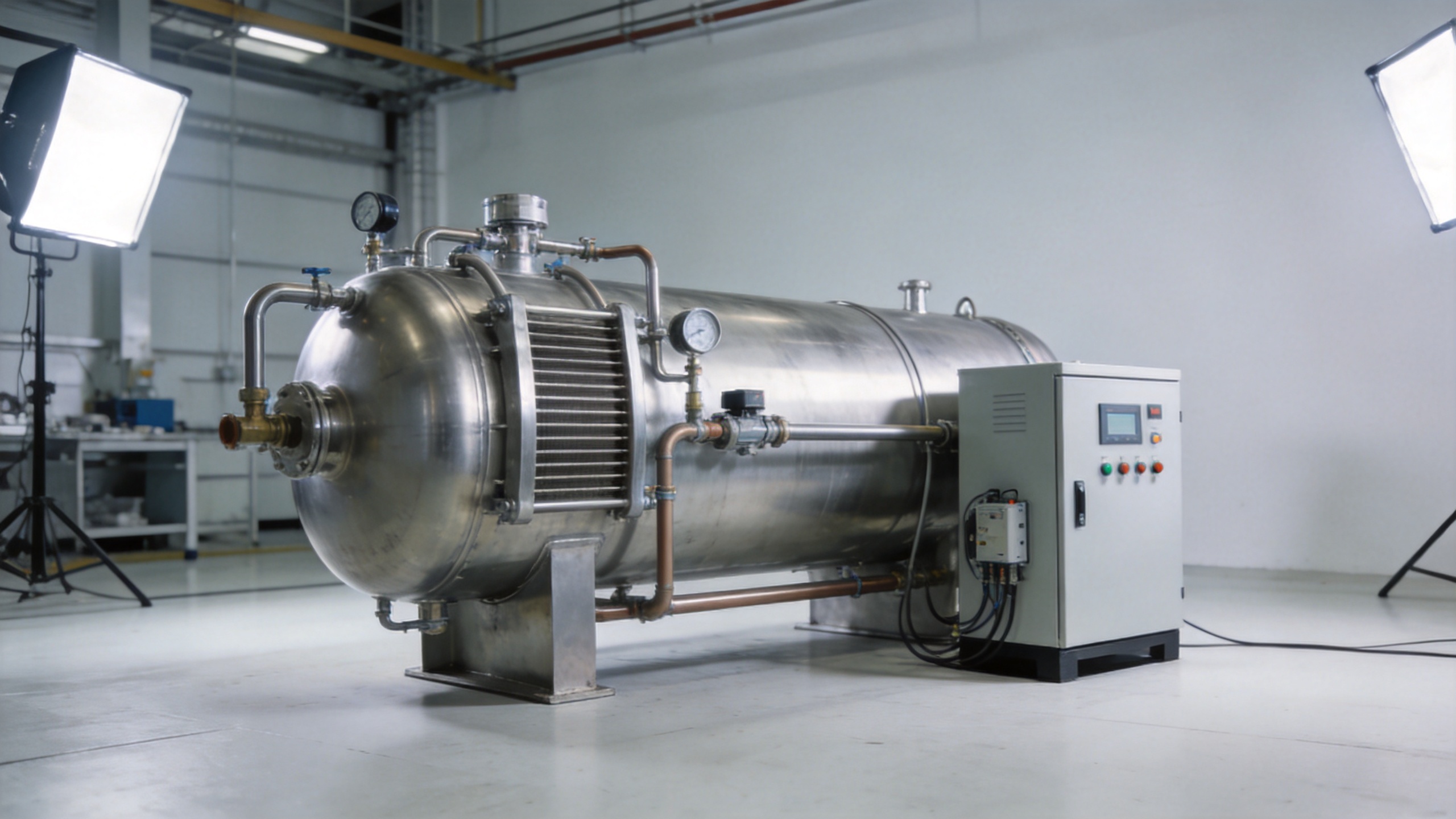
Match gas interfaces to real hydrogen gas production behavior
A hydrogen gas production unit may not deliver a perfectly constant flow or pressure. Confirm how the metal hydride storage tank will respond to startup, shutdown, partial-load operation, and planned maintenance. The integration review should map isolation valves, purge points, filtration or purification responsibilities, pressure measurement locations, and the sequence used to admit or release hydrogen.
It is useful to develop a simple cause-and-effect matrix. For example, a high-temperature alarm may reduce charging demand; a hydrogen detector alarm may isolate defined valves and initiate the site’s approved emergency response; a loss of thermal circulation may place the metal hydride storage tank in a controlled hold state. These functions need project-specific engineering and local code review. They should not be assumed from a vessel description alone.
Evaluate safety, controls, and siting as one package
Solid-state storage can change the pressure profile of a hydrogen installation, but it does not eliminate the need for a full safety design. The final arrangement should be reviewed against the applicable jurisdiction, project hazard study, equipment documentation, and approved relief and venting philosophy. Typical integration topics include hydrogen detection, ventilation, pressure relief routing, hazardous-area classification, emergency isolation, grounding, cable routing, access control, and maintenance clearances.
For controls, identify the owner of the supervisory logic. A metal hydride storage tank may provide local instrumentation, while the site PLC or energy-management system decides when it is charged or discharged. Agree on signal lists, communications protocol, alarm priorities, permissives, manual override rules, data retention, and cybersecurity boundaries. A clear interface register is more valuable than a long list of generic features because it assigns every sensor, valve, and response action to a responsible party.
Use a commissioning plan to expose missing requirements
Commissioning is a useful test of whether the integration definition is complete. Before delivery, create a staged plan covering mechanical completion, leak testing, controls checkout, thermal-loop verification, inerting or purging procedures where applicable, initial hydrogen introduction, functional alarms, and performance verification against the agreed operating envelope. Acceptance criteria should distinguish between tank-level checks and site-level checks.
For projects exploring packaged solutions, review the confirmed site product information for the Hydrogen energy capsules and the Mega hydrogen storage unit. The final equipment selection should still be based on the project’s verified flow, thermal, controls, safety, and installation requirements.
A practical integration checklist for buyers
- Duty definition: Document the required stored quantity, delivery profile, availability target, and operating schedule.
- Gas boundary: Confirm purity, pressure, flow, isolation, purge, and measurement requirements.
- Thermal boundary: Size and assign the heating/cooling interface before fixing the operating duty.
- Electrical and controls boundary: Agree power quality, I/O, communications, interlocks, and control ownership.
- Safety boundary: Verify siting, ventilation, detection, relief, emergency response, and local compliance obligations.
- Delivery boundary: Define documentation, factory tests, site tests, commissioning support, spares, and training.
Move from comparison to an integration-ready specification
A suitable metal hydride storage tank selection fits the complete hydrogen system, not just a capacity calculation. By assessing thermal duty, gas behavior, controls, safety interfaces, and commissioning responsibilities early, buyers can compare solutions on their real integration burden. This approach also gives suppliers a clearer basis for proposing a configuration that supports the intended hydrogen gas production and end-use profile without unsupported assumptions.