
 EN

Metal Hydride Storage Containers: Specifications to Review Before Buying
For a B2B hydrogen project, buying a container is not simply a question of how many kilograms or standard litres it can hold. Metal hydride hydrogen storage couples a hydrogen-absorbing material with a pressure vessel, heat-transfer path, controls, and site interfaces. A procurement team should therefore compare the delivered system boundary, not just a catalogue capacity. The most useful quotation is one that states the operating conditions behind every headline figure.
Metal hydride systems can offer a compact, solid-state route for stationary hydrogen buffering. Their practical value, however, depends on the duty cycle, available heat, required outlet pressure, installation constraints, and the evidence supplied for safe operation. Use the checklist below to turn a broad technical discussion into a reviewable purchase specification.
1. Define the usable capacity, not only the nominal capacity
Ask the supplier to state capacity in a single, unambiguous basis: hydrogen mass, normal cubic metres, or standard litres, together with the reference temperature and pressure. Then request the usable capacity across your planned charge and discharge window. For metal hydride hydrogen storage, a value measured at one temperature or equilibrium pressure may not be the amount available to your downstream load.
- What is the rated hydrogen inventory and what is the specified deliverable inventory?
- At what inlet pressure, outlet pressure, ambient range, and thermal condition is the value measured?
- How does usable capacity change at the end of the intended service interval?
- Does the quotation include the hydride material, vessel, manifolds, valves, insulation, sensors, and controls?
A metal hydride storage tank should also be assessed as part of the project energy balance. The material mass, auxiliary heating or cooling, and package footprint can matter as much as hydrogen density when the installation is stationary or containerized.
2. Review pressure ratings and the complete operating envelope
Solid-state storage is often considered when a project wants to avoid relying exclusively on high-pressure gas inventory. That does not remove the need for a disciplined pressure review. Specify maximum allowable working pressure, relief-device set point, normal charging pressure, expected delivery pressure, and pressure drop at required flow. These numbers must be linked to the declared temperature range and hydrogen purity assumptions.
Ask for a pressure-and-temperature operating map rather than one isolated pressure figure. The map should show where absorption, desorption, standby, abnormal shutdown, and restart are permitted. It should also identify instrument ranges, set points, alarm actions, vent routing requirements, and isolation boundaries. This lets the owner verify that the metal hydride hydrogen storage package matches the electrolyser, compressor, fuel cell, pipeline, or other connected equipment.
3. Treat thermal management as a core specification
Hydrogen absorption and release in a metal hydride storage tank are thermal processes. Charging commonly requires removal of heat, while discharge may require heat input to sustain the required hydrogen flow. A container that looks adequate on a capacity sheet can underperform if its heat-transfer system cannot follow the intended duty cycle.
Require a thermal design statement covering the heat-transfer medium, connection sizes, supply and return temperatures, flow requirements, design heat load, control approach, insulation, and freeze or over-temperature protections. Ask for charge and discharge curves at the project’s actual conditions, including warm-up time, response to load steps, and repeat-cycle performance. Where waste heat or a dedicated thermal loop is part of the concept, define who supplies it and what happens when it is unavailable.
| Thermal check | Why it matters | Evidence to request |
|---|---|---|
| Heat removal during charging | Limits hydrogen uptake rate | Heat-load calculation and charging curve |
| Heat supply during discharge | Supports outlet flow and pressure | Duty-cycle curve at stated inlet temperature |
| Thermal controls | Protects material and equipment boundaries | P&ID, sensor list, alarms, and interlocks |
| Site utility interface | Prevents an unworkable installation | Utility schedule and connection responsibility matrix |
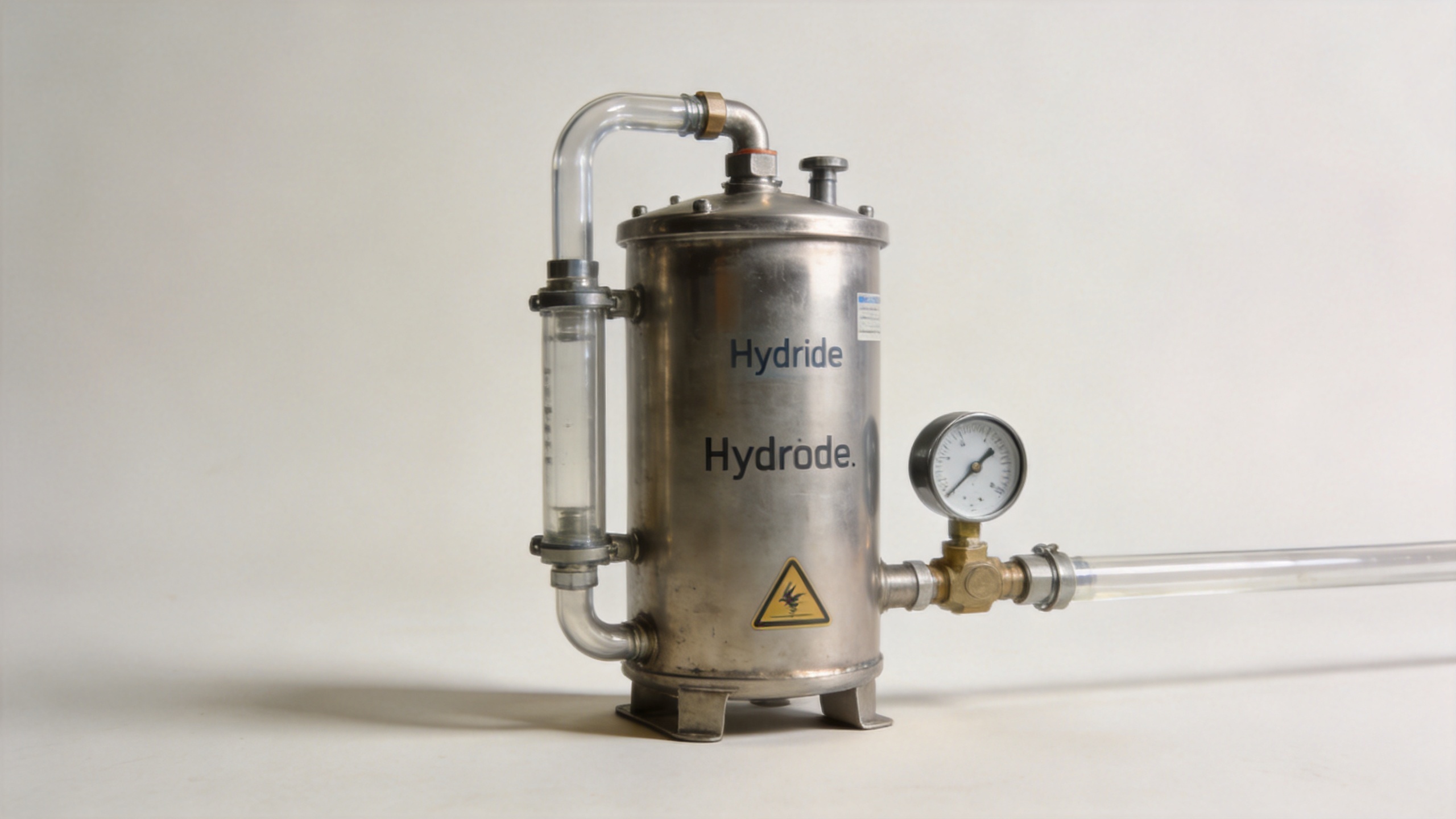
4. Check integration, footprint, and maintainability before selecting a package
Procurement teams should confirm the actual package dimensions, dry and operating weight, lifting points, foundation loads, access clearance, and transport restrictions. Include the thermal skid, controls enclosure, vent line, safety distances, and service access—not just the vessel envelope. For a modular project, verify the isolation arrangement and how additional modules affect headers, controls, heat supply, ventilation, and permits.
Integration documentation should identify hydrogen inlet and outlet conditions, electrical requirements, communications protocol, emergency stops, gas detection interfaces, and vent or purge connections. If the project needs a larger packaged option, review the available Mega hydrogen storage unit page with the supplier, then obtain a project-specific interface schedule rather than inferring performance from a product name.
Maintenance planning deserves equal attention. Ask how valves, sensors, heat-transfer components, and relief devices are inspected or replaced; what monitoring indicates material condition; and which tasks require depressurization, purging, or specialist support. Define spare-parts scope and expected lead times in the purchase order.
5. Make compliance and acceptance evidence part of the bid evaluation
Applicable requirements depend on whether the system is stationary, transportable, packaged in a container, or used in a regulated local installation. ISO 16111 is relevant to transportable hydrogen storage devices using hydrogen-absorbed materials, but it is not a substitute for confirming local regulations, site rules, and the exact equipment scope. Ask the supplier to list the standards, design codes, material traceability, test procedures, and third-party certificates that apply to the offered configuration.
Before award, request a document register that includes general arrangement drawings, P&IDs, operating manual, hazard review, relief sizing basis, electrical and control documentation, factory acceptance test plan, inspection records, warranty terms, and commissioning responsibilities. Acceptance criteria should define capacity, leakage, pressure hold, instrumentation, alarms, thermal performance, and functional shutdown tests under agreed conditions.
6. Use a decision-ready procurement checklist
- State required usable hydrogen inventory, delivery pressure, flow, and duty cycle.
- Compare capacity on the same reference basis and at the same thermal conditions.
- Verify pressure limits, relief strategy, purging, and hydrogen detection interfaces.
- Validate heat removal and heat supply with test curves—not assumptions.
- Confirm footprint, weight, lifting, access, utilities, and expansion provisions.
- Score documentation, test evidence, service scope, and compliance against the project requirement.
A suitable metal hydride hydrogen storage choice is the container whose declared performance can be traced to your actual operating boundaries. By reviewing capacity, pressure, thermal management, integration, and documentation together, buyers can compare proposals on a technically meaningful basis and reduce late-stage interface changes.
7. Questions to put on every metal hydride hydrogen storage datasheet
Use the phrase metal hydride hydrogen storage as a system requirement, not a label. For metal hydride hydrogen storage, require the supplier to define the material grade, design life, permitted hydrogen quality, and conditions for initial activation. A metal hydride hydrogen storage quotation should state whether each performance number applies to a new unit, a representative unit, or the delivered unit covered by the acceptance test.
How should capacity be compared?
For metal hydride hydrogen storage, compare usable inventory at the same inlet pressure, outlet pressure, and thermal utility condition. A metal hydride hydrogen storage package may have a different practical result when the requested flow rises or the available cooling changes. Request a test method and a clear acceptance tolerance for each metal hydride hydrogen storage module.
What should the thermal schedule contain?
Metal hydride hydrogen storage requires an explicit thermal schedule. The metal hydride hydrogen storage supplier should identify heating and cooling media, design temperatures, flow rates, heat loads, connection points, and control responsibilities. During bid review, ask how metal hydride hydrogen storage responds to loss of the thermal utility, sensor failure, or a controlled shutdown.
What safety information is needed?
For metal hydride hydrogen storage, obtain relief-device information, vent routing requirements, leak-test procedures, hydrogen detection interfaces, and purge instructions. A metal hydride hydrogen storage package should include the operating limits that trigger alarms or automatic isolation, with the responsible party identified for every interlock.
What proves long-term suitability?
Ask for cycle-test scope, inspection intervals, maintenance instructions, spare-parts list, and warranty exclusions for metal hydride hydrogen storage. When comparing a metal hydride storage tank, confirm how the supplier records material condition and what evidence is available if a future capacity or flow claim must be verified.