
 EN

Long-Duration Energy Storage Technologies: How Hydrogen Fits the Mix
Renewable power projects increasingly need more than a few hours of flexibility. When production from wind or solar and the required load no longer align within a single day, planners must compare long duration energy storage technologies as a system rather than choose a device in isolation. Hydrogen is one candidate in that mix, but it is not a substitute for every battery, thermal store, or pumped-storage project.
From a system-integration perspective, the useful question is not “which storage technology wins?” It is: what duration, power profile, site conditions, and end-use must the project support? The U.S. Department of Energy describes long-duration storage as systems able to deliver electricity for 10 or more hours. That threshold is helpful for screening, but it does not remove the need to match a technology to the operating boundary.
Start With the Service the Storage System Must Deliver
Long duration energy storage technologies serve different jobs. Some smooth solar output into the evening. Some cover several low-renewable days. Others preserve energy across seasons or convert surplus power into a fuel that can later serve electricity, heat, or industrial demand. A project team should define the required discharge duration before comparing equipment.
- Intra-day shifting: move energy over hours to manage daily solar or load patterns.
- Inter-day resilience: support roughly 10 to 36 hours when weather or demand creates a longer mismatch.
- Multi-day operation: address periods that may extend from about 36 to 160 hours, subject to the project definition.
- Seasonal shifting: retain energy for much longer intervals, where energy capacity, siting, and conversion losses matter differently.
This framing prevents a common mistake: judging all ldes technologies by the same round-trip-efficiency or response-time metric. Those measures matter, yet they do not alone describe the value of reliable energy availability after a prolonged renewable shortfall.
When reviewing long duration energy storage technologies, keep the screening sequence visible: duration first, then delivery form, then site and integration limits. This makes the comparison more useful than a single headline ranking.
How the Main Long Duration Energy Storage Technologies Differ
A practical comparison begins with the storage medium and the site. Pumped hydro can offer large energy capacity where topography, water access, permitting, and civil works align. Compressed-air systems depend on suitable geological or engineered storage conditions. Thermal storage can fit processes that can use heat directly or tolerate an electricity-to-heat-to-electricity pathway. Flow batteries can be evaluated where longer electrical discharge and independent scaling of power and energy are relevant.
Hydrogen energy storage adds another route: use electricity to produce hydrogen, store the hydrogen, and later convert it to electricity or supply it to another useful end use. This creates a broader system question than a battery-only comparison. The conversion chain includes power supply, electrolyzer operation, hydrogen storage, balance-of-plant interfaces, and—if electricity is required later—a reconversion pathway. Each element should be evaluated under the same load assumptions.
| Technology family | Typical selection question | Key project condition to verify |
|---|---|---|
| Electrochemical storage | Is the project mainly shifting electricity over a defined number of hours? | Duty cycle, duration, degradation profile, and expansion plan |
| Pumped hydro or compressed air | Can the site support a large, infrastructure-led storage asset? | Geology, water or cavern availability, permitting, and construction scope |
| Thermal storage | Can stored heat be used directly or integrated with the process? | Temperature requirement, heat demand profile, and conversion pathway |
| Hydrogen storage | Does the project need multi-day flexibility, long retention, or a hydrogen end use? | Renewable profile, water and power interfaces, storage route, safety boundary, and offtake |
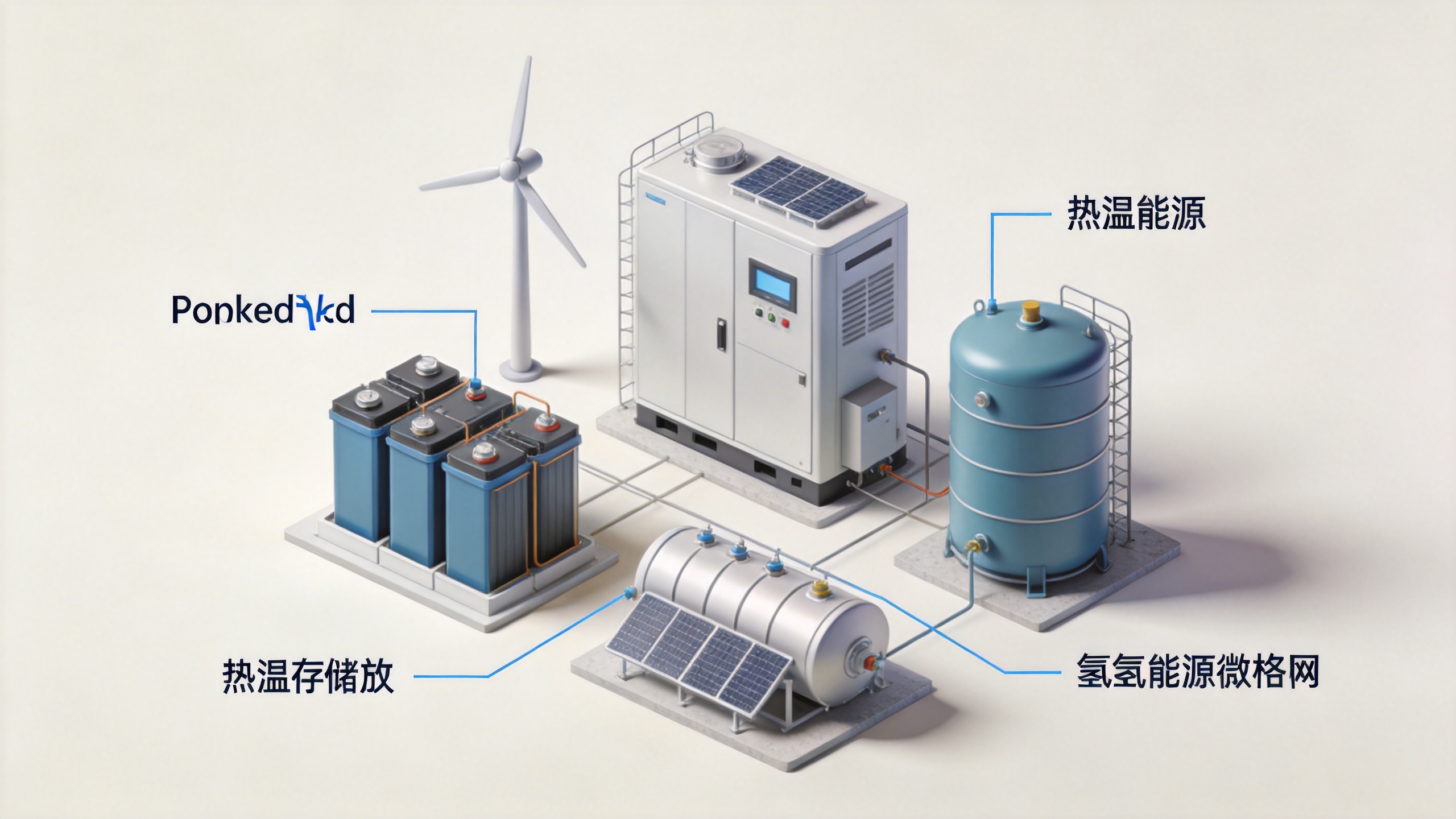
For long duration energy storage technologies, the portfolio view also clarifies which assets must cycle often and which must simply remain available. That distinction is central when comparing power-oriented equipment with energy-capacity-oriented infrastructure.
Where Hydrogen Belongs in an LDES Portfolio
Hydrogen is worth evaluating when the storage question extends beyond short daily arbitrage. Its role becomes more relevant when a project must absorb variable renewable output, keep energy available for long intervals, or connect stored energy with hydrogen-consuming operations. Put differently, hydrogen can be part of a portfolio because it can link electricity storage with fuel, industrial, or microgrid planning—not because it should be assumed to replace every shorter-duration asset.
For renewable energy storage systems, hydrogen deserves a structured evaluation when several conditions coincide:
- Surplus renewable generation occurs in blocks that cannot be fully used by near-term electrical demand.
- The required storage duration may move from hours toward multi-day or longer availability.
- There is a credible hydrogen end use, reconversion plan, or phased microgrid application.
- The project can define interfaces for power quality, water supply, storage, controls, and safe operations.
- The economic model compares the whole system boundary instead of only one component price.
A closer look often changes the discussion. For example, an electrolyzer may be sized around renewable availability, while the storage route is sized around delivery timing and site constraints. If a project only needs a repeatable evening peak shift, other long duration energy storage technologies may be a more direct fit. If the project must maintain flexibility over extended weather-driven gaps or coordinate with a hydrogen load, hydrogen may warrant deeper engineering review.
Hydrogen is therefore evaluated within long duration energy storage technologies as a conversion, storage, and delivery pathway. It should be compared on the same project assumptions as other options, while retaining its distinct value where hydrogen itself is useful.
Evaluate the Hydrogen Pathway as an Integrated System
Hydrogen storage decisions should be made with a system map. Start with the energy source: its variability, curtailment risk, and expected operating hours. Then define the desired output: electricity, hydrogen supply, heat, backup capability, or a combination. Finally, identify the storage route and the operational controls needed to connect those points.
Rather than focusing on a single headline figure, document the assumptions behind energy conversion, storage duration, delivery pressure or condition, and downstream use. A system-integration review should also make clear where measurements, supplier data, and site studies are still needed. This is especially important for ldes technologies, where the project value can depend on avoided curtailment, resilience needs, infrastructure use, and the timing of demand.
For teams assessing a long-term hydrogen route, Hyto Energy offers a Long-term Energy Storage Programme as a starting point for discussing storage-system requirements. The appropriate configuration still depends on the verified project boundary and operating conditions.
Among long duration energy storage technologies, hydrogen requires particular attention to connections because its performance depends on the linked system rather than a storage vessel alone. The project definition should identify what will be measured and validated at each interface.
A Decision Checklist for Technology Mixing
Consideration-stage planning works better when the team compares options against a common checklist. Use the following questions before narrowing the shortlist:
- What duration must the system cover under normal, stressed, and resilience conditions?
- Is the stored output required as electricity only, or can it be useful as hydrogen or heat?
- What are the renewable-generation pattern and load profile across days and seasons?
- Which site conditions constrain civil works, water, storage volume, permitting, or grid connection?
- Which interfaces must be designed now, and which can be phased as demand grows?
- What assumptions will the lifecycle comparison use for utilization, replacement, operations, and expansion?
The result may be a mixed architecture. Shorter-duration assets can handle frequent cycling, while a hydrogen pathway is assessed for longer retention or energy uses that batteries do not directly address. That is the central value of a technology portfolio: each component is matched to a distinct service rather than forced into a one-size-fits-all role.
A technology-mixing review should keep long duration energy storage technologies in a common evaluation frame, but it should not erase their different operating boundaries. The more clearly those boundaries are stated, the more credible the resulting shortlist becomes.
Conclusion: Match Duration and System Boundaries Before Equipment
Long duration energy storage technologies should be compared by the service they must provide, not by a single technology label. Hydrogen can fit the mix when duration, renewable variability, storage retention, and end-use integration justify a broader conversion-and-storage pathway. It may be less appropriate where the need is narrow, short, and purely electrical.
For project teams assessing long duration energy storage technologies, the next step is to document the load profile, renewable resource, duration requirement, delivery mode, and site constraints. With those conditions defined, a technical discussion can move from general interest in ldes technologies to a transparent shortlist for the specific renewable energy storage system.