 EN
EN

Industrial Hydrogen Production Methods: Electrolysis, Reforming and Project Fit
Industrial hydrogen gas production is not a single technology decision. It is a system decision involving feedstock, electricity, heat, operating profile, carbon requirements, water treatment, compression, storage and the end use of the gas. For B2B teams developing a hydrogen project, the useful question is not simply “which route is best?” It is “which route fits the site, the demand pattern and the project boundary?”
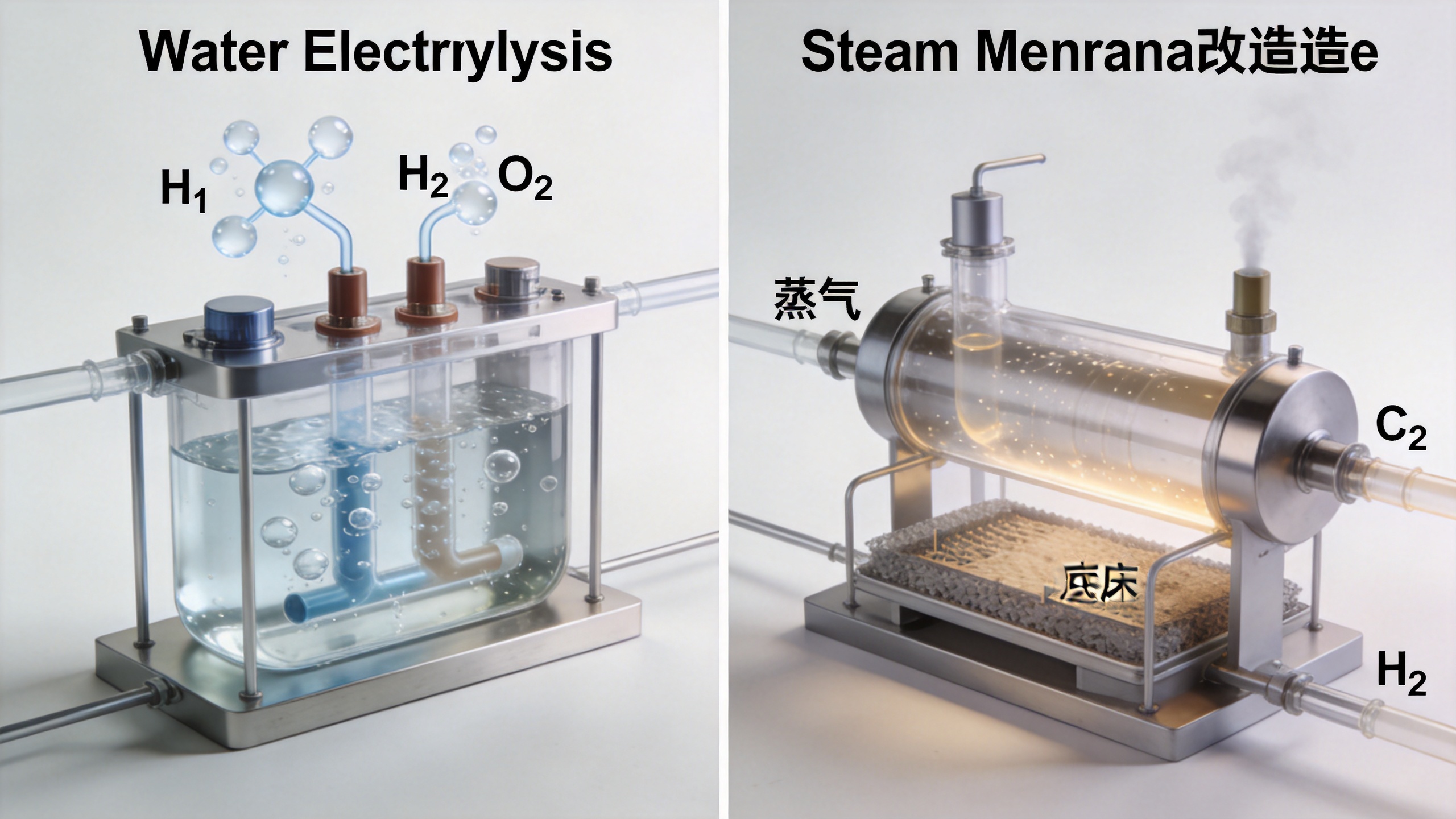
Steam methane reforming and water electrolysis remain two of the most widely discussed routes. Each can be appropriate under different conditions. Green hydrogen generation through electrolysis is gaining attention as renewable-power projects scale, while reforming remains a mature option where natural-gas infrastructure and continuous demand are central to the project. The International Energy Agency reported 2 GW of global installed water-electrolysis capacity in 2024, showing that electrolysis is moving beyond pilots, although deployment and project economics still depend on local conditions.
Start with the project boundary, not the equipment name
Before comparing technologies, define what the project must deliver: daily hydrogen volume, purity, pressure, availability, ramping needs and the destination for oxygen or recovered heat. Then map the available inputs. A site with reliable pipeline gas and a stable, high-utilization hydrogen load has a different starting point from a renewable-energy site managing variable solar or wind output.
This framing matters because a nominal efficiency figure cannot settle the decision on its own. More precisely, the practical fit depends on the electricity source, gas supply, water quality, operating hours and integration requirements. A route that looks attractive at the stack or reactor level may create extra balance-of-plant work once compression, storage, purification and grid connection are included.
Steam methane reforming: mature hydrogen gas production for steady gas-fed sites
Steam methane reforming (SMR) produces hydrogen by reacting methane with steam at elevated temperature over a catalyst. The U.S. Department of Energy describes typical reforming temperatures of roughly 700–1,000°C, followed by water-gas shift and purification stages. This is a well-established industrial configuration with familiar supply chains and operating practices.
For hydrogen gas production, reforming is often considered when natural gas is available, the load is relatively steady and the project can accommodate the associated thermal process and carbon-management boundary. The evaluation should include methane supply and price exposure, steam generation, heat integration, emissions obligations, carbon-capture options where relevant, and the reliability of the downstream purification train.
Its key trade-off is straightforward: the feedstock contains carbon. A project that needs lower lifecycle emissions must examine the whole system rather than applying a label to the hydrogen alone. That includes upstream gas sourcing, process emissions, any carbon-capture design, transport and the method used to document emissions performance.
Water electrolysis: flexible production tied to power and water conditions
Electrolysis splits water using electricity, producing hydrogen and oxygen at the process boundary. In an industrial hydrogen gas production project, the carbon profile therefore depends strongly on the electricity supplied to the electrolyser. When the power is matched with qualifying low-emissions sources and the operational evidence is available, electrolysis can support a green hydrogen generation pathway. When grid electricity is used, the project team should assess the applicable power mix and accounting method instead of assuming the same result.
Electrolysis can be particularly relevant where renewable generation, curtailed energy, nuclear power or a microgrid creates a credible power-integration case. It also changes the operating conversation: teams must assess power variability, ramping strategy, water treatment, cooling, hydrogen compression and storage sizing. A suitable design coordinates these elements with the actual load profile.
AEM water electrolysis is one option within the broader electrolyser landscape. It may be suitable where the project needs a scalable water-electrolysis architecture and the technical team has validated the required operating window, balance-of-plant design and service approach. It should be evaluated alongside the project’s specific requirements rather than positioned as a universal substitute for every reforming application.
A practical comparison: which conditions favor each route?
| Decision dimension | Reforming focus | Electrolysis focus |
|---|---|---|
| Primary input | Natural gas or another suitable hydrocarbon feedstock | Electricity and treated water |
| Operating profile | Often aligns with stable, high-utilization demand | Can be designed around available power and desired operating flexibility |
| Core integration work | Steam, heat, shift reaction, purification and emissions boundary | Power connection, water treatment, cooling, compression and storage |
| Carbon assessment | Requires a clear approach to process and upstream emissions | Requires a clear approach to electricity sourcing and operational matching |
| Project question | Can the site secure resilient feedstock and manage the carbon boundary? | Can the site secure suitable power, water and flexible system integration? |
Use this table as a screening tool, not as a final design basis. The next stage should quantify load duration, energy cost assumptions, hydrogen delivery pressure, redundancy requirements, permitting and the value of any co-products. For example, oxygen may be relevant to some sites, but it should not be treated as project value until the local user, purity requirement and logistics are verified.
How to build a route-selection checklist
- Define the hydrogen demand. Specify normal and peak flow, purity, pressure, annual operating hours and tolerance for interruption.
- Validate site inputs. Compare the quality, availability and commercial structure of natural gas, electricity and water.
- Set the emissions boundary. Agree on the accounting method before comparing low-carbon claims or carbon-management costs.
- Model the full system. Include treatment, compression, storage, controls, safety systems and connections—not only the core production unit.
- Plan for operating reality. Review maintenance access, redundancy, spare parts, service capability and how the system responds to changing loads.
For projects considering modular electrolyser capacity, the product configuration should be checked against the required engineering scope. Hyto Energy provides product information for 100KW-500KW systems and 1MW-5MW systems. These pages can support an initial equipment conversation, while the final project fit still requires confirmation of power, water, hydrogen handling and site interfaces.
Project-screening questions for hydrogen teams
A short screening session can make hydrogen gas production choices more concrete. For each question, record an answer, a source and an owner rather than relying on an assumed technology preference.
- What hourly demand profile must hydrogen gas production meet, and which peaks can storage absorb?
- Which electricity contract, generation asset or grid connection will support green hydrogen generation?
- Which gas supply terms, water specification and treatment obligations apply to hydrogen gas production at this site?
- What operating-hours assumption is used for the hydrogen gas production model?
- How will the project evidence the electricity basis for green hydrogen generation?
- Which compression, buffering and delivery-pressure requirements sit outside the core hydrogen gas production unit?
- What downtime, maintenance access and redundancy case is needed for hydrogen gas production?
- Does the site have a verified user for oxygen from green hydrogen generation, or should it be treated as a non-creditable by-product?
Can one project use both approaches?
Yes. A phased project can keep existing hydrogen gas production assets in service while evaluating electrolysis for a defined load, renewable-power window or expansion. The decision should still compare each hydrogen gas production stream on the same safety, cost, availability and emissions boundary. A hybrid plan is not automatically a green hydrogen generation plan; the power evidence and operating records remain necessary.
What should an RFQ ask for?
For hydrogen gas production, request the proposed operating range, input specifications, utilities list, hydrogen outlet conditions, controls interface, maintenance assumptions and boundaries of supply. For green hydrogen generation, also ask how the design handles power variation, water quality, curtailment, storage and data needed for energy-source reporting. This gives engineering and procurement teams a consistent basis for comparing hydrogen gas production offers.
When is AEM electrolysis worth evaluating?
AEM technology is worth evaluating when an electrolysis-based hydrogen gas production route matches the site's power and water conditions, the required scale and the integration plan. The evaluation should test availability, operating behavior, service support and balance-of-plant compatibility. In a green hydrogen generation project, it should also test the renewable-power matching approach rather than treating the stack technology as the full answer.
Choose a pathway that can be operated and evidenced
The most useful conclusion is conditional. Reforming can remain a practical industrial route where a gas-based process, stable utilization and carbon-management plan align. Electrolysis can be a strong candidate where power sourcing, water treatment and flexible integration support the target operating model. For green hydrogen generation, the credibility of the electricity and operational data is as important as the electrolyser itself.
Start by turning the project brief into measurable conditions, then compare routes against the same boundary. That approach makes hydrogen gas production planning more transparent and helps engineering, procurement and commercial teams identify the assumptions that must be validated before a final technology choice.