 EN

Industrial Hydrogen Generator Components: A Buyer’s Technical Overview
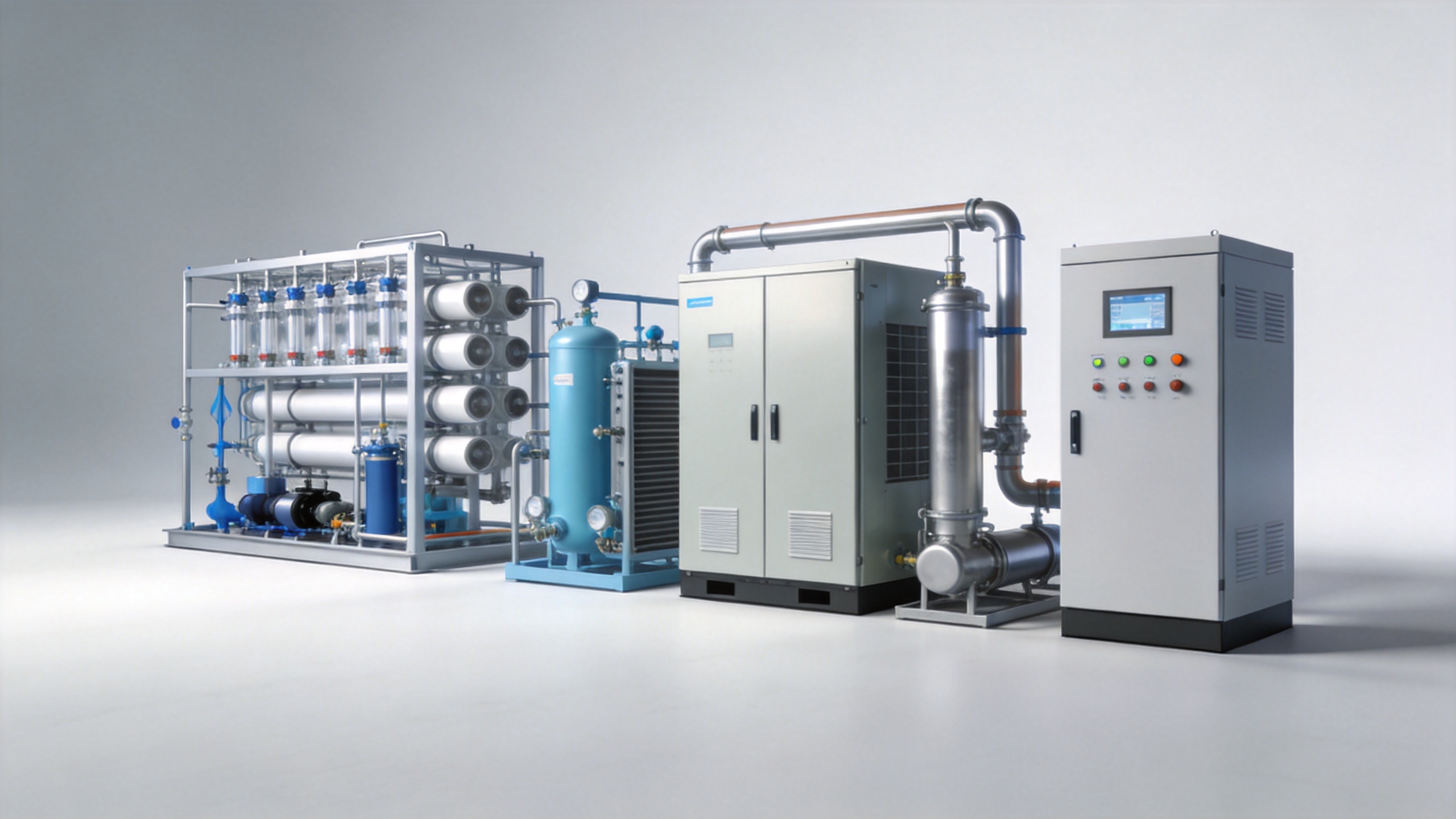
For an industrial project team, an electrolysis hydrogen generator is not simply a stack in a cabinet. It is a coordinated production system that turns prepared water and electrical power into hydrogen while managing heat, gas quality, pressure, controls, and safety. That system view matters before comparing quotations. A stack may look attractive in isolation, yet the surrounding equipment can determine whether the installation fits the site’s power profile, water supply, operating schedule, and downstream hydrogen use.
This overview is written for buyers evaluating hydrogen electrolysis systems at industrial scale. It separates the core conversion equipment from balance-of-plant hardware, then turns that map into practical questions for suppliers. The purpose is not to declare one configuration right for every project; it is to help a project team define the boundary conditions that make an electrolysis hydrogen generator suitable for its application.
Start with the system boundary, not the headline capacity
Water electrolysis uses electricity to split water into hydrogen and oxygen. In an industrial electrolysis hydrogen generator, the electrolyzer stack is the electrochemical core, but the delivered installation normally includes much more. Buyers should first identify where the supplier’s scope begins and ends: incoming power, water treatment, hydrogen outlet condition, compression, storage connection, oxygen handling, cooling, ventilation, and plant controls may sit inside or outside the package.
This distinction avoids a common procurement problem: comparing a stack rating from one quotation with a system-level rating from another. Ask each supplier to mark the battery limits on a process flow diagram and list the utility assumptions behind the quoted output. The water source, ambient conditions, required outlet pressure, purity expectations, operating hours, and ramping profile all influence the practical design of an electrolysis hydrogen generator.
The electrolyzer stack: the conversion core
The stack contains repeating electrochemical cells, electrodes, separators or membranes, flow fields, seals, and electrical connections. Depending on the technology, the stack may use alkaline, proton-exchange membrane, anion-exchange membrane, or solid-oxide principles. Buyers do not need to select a technology from a brochure alone. They need a clear explanation of how the proposed stack responds to expected load changes, water quality, temperature management, maintenance access, and the required hydrogen delivery condition.
For every proposed electrolysis hydrogen generator, request a data sheet that distinguishes nominal, minimum, and maximum operating conditions. Confirm whether the stated hydrogen production rate is measured at the stack outlet or after downstream treatment. Ask how efficiency is expressed, which auxiliaries are included, and which operating conditions support the calculation. These questions turn a headline number into a basis for a comparable technical review.
Water preparation and circulation equipment
Feedwater quality is a system requirement rather than a minor utility detail. An industrial electrolysis hydrogen generator may need filtration, deionization or other treatment steps, storage, circulation pumps, conductivity monitoring, and sampling points. The exact arrangement depends on the technology and site water condition. A supplier should state the feedwater specification, expected consumption boundary, treatment responsibility, reject-water handling, and the instruments used to detect conditions that call for operator action.
During evaluation, check whether the water package is sized for continuous operation, intermittent operation, or a specific duty cycle. A treatment train that suits a demonstration schedule may require a different operating strategy at higher annual utilization. It is also useful to ask for the maintenance tasks, consumables, drainage needs, and the site connection points needed to support the water system.
Power conversion, cooling, and controls
An electrolysis hydrogen generator needs electrical equipment that converts the available site supply into the current and voltage profile required by the stack. Rectifiers, transformers, switchgear, protection devices, and power-quality considerations should therefore be reviewed as part of the package. If the plant will follow variable renewable generation, request the permissible ramp rates, turndown range, restart conditions, and the control logic used during power interruptions.
Cooling is similarly linked to performance and site integration. The thermal-management scope may include a closed loop, heat exchangers, pumps, instrumentation, and a connection point for a site cooling utility. Ask suppliers to identify the heat-rejection assumptions and the consequences of ambient temperature limits. Plant controls should show not only normal sequencing but also alarms, interlocks, remote communication options, event records, and the division of responsibility between the packaged system and the wider site controls.
Hydrogen conditioning and the delivery connection
Hydrogen leaving the electrochemical section may require separation, drying, purification, pressure control, measurement, and compression before it reaches the point of use or storage. For an electrolysis hydrogen generator, these downstream components must be matched to the application rather than treated as generic add-ons. A fuel-cell test facility, an industrial process, and a storage-linked energy project can have different pressure, flow-stability, purity, and availability expectations.
Request a line-by-line description of the delivered hydrogen condition at the contractual outlet. The document should make clear which measurements are continuous, where samples can be taken, which downstream equipment is optional, and what utilities it needs. If the project is considering a larger industrial package, review the available 100KW-500KW hydrogen system option alongside the site’s actual demand profile and connection requirements, not as a substitute for a full engineering review.
Safety functions and documentation to verify
Hydrogen systems require a documented safety review matched to the installation jurisdiction and site design. In a packaged electrolysis hydrogen generator, buyers should ask for the hazard analysis, ventilation assumptions, gas-detection and shutdown philosophy, electrical protection details, pressure-relief routing, emergency-stop logic, and commissioning procedures. ISO 22734 addresses construction, safety, and performance requirements for modular or factory-matched hydrogen generators using water electrolysis; whether and how it applies should be verified with the supplier and local project requirements.
Do not limit this review to a certificate list. Ask what documents accompany the equipment, which parts of the system are covered, and which installation-level measures remain the buyer’s responsibility. The most useful answer identifies responsibility boundaries and verification steps rather than relying on broad safety language.
A buyer’s comparison checklist
- Define the required hydrogen flow, pressure, quality, availability, and destination.
- Document incoming electrical supply, variability, grid rules, and planned operating hours.
- Confirm water source, treatment scope, cooling connection, drainage, and utility boundaries.
- Compare electrolysis hydrogen generator quotations on the same battery limits and measurement conditions.
- Review controls, alarms, data access, maintenance access, consumables, and spare-parts assumptions.
- Request process diagrams, utility lists, performance definitions, safety documentation, and a commissioning plan.
Make the technical discussion comparable
A productive supplier discussion begins with the application boundary: how much hydrogen is needed, when it is needed, what condition it must meet, and how the site will supply utilities and manage the gas. Once those conditions are visible, the stack, balance of plant, and delivery equipment can be assessed as one electrolysis hydrogen generator system. That approach gives industrial buyers a more reliable basis for comparing configurations, identifying scope gaps, and preparing a request for technical clarification.