
 EN
EN

How to Evaluate Hydrogen Storage Density and Safety for Industrial Use
For an industrial energy project, hydrogen solid form should be treated as a system-selection question, not simply a materials question. The phrase may describe cryogenic solid hydrogen in physics discussions, but industrial teams usually mean solid-state storage: hydrogen retained in a material and released under controlled conditions. A practical evaluation therefore asks how much usable hydrogen the complete system stores, how predictably it releases hydrogen, and how the equipment behaves during normal operation, maintenance, and abnormal events.
From a system-integrator perspective, the most credible comparison starts with the duty cycle. Define demand, refill interval, ambient conditions, space limits, electrical and thermal interfaces, and the consequences of an unavailable module before comparing any storage technology. This prevents a high laboratory value for hydrogen solid form from being mistaken for the capacity available to a real industrial load.
Separate material capacity from usable system density
When evaluating hydrogen solid form, request both gravimetric and volumetric figures at the system boundary. Gravimetric capacity compares usable hydrogen mass with the mass of the complete storage package. Volumetric capacity compares usable hydrogen with the installed volume. Neither metric should exclude vessels, heat exchangers, valves, sensors, insulation, structural frames, or controls if those items are needed in the delivered installation.
A material may show an attractive hydrogen uptake result, while the packaged system needs extra thermal-management hardware to charge or discharge at the required rate. That hardware changes both weight and footprint. Ask suppliers to state the measurement basis, operating temperatures, cycle count, hydrogen purity assumptions, and whether the reported number is reversible usable capacity or a theoretical material value.
External benchmarks can help frame the discussion, but they are not approval criteria for every industrial project. For example, the U.S. Department of Energy lists 2025 onboard light-duty targets of 5.5 wt% system gravimetric capacity and 40 kg/m³ system volumetric capacity. These targets illustrate why system boundaries matter; they should not be copied directly into a stationary or process-integrated specification for hydrogen solid form.
Match density to the industrial duty cycle
Density only creates value when it supports the required operating profile. For a low-to-moderate, predictable load, a hydrogen solid form system may be evaluated for compact siting, controlled release behavior, and reduced dependence on very high-pressure storage. For a fast-changing load, the key questions shift to response time, peak flow, thermal recovery, and whether several modules must operate in parallel.
- Usable delivery: What hydrogen mass is available within the stated pressure, temperature, and flow limits?
- Charge and discharge rate: What heating or cooling duty is required at nominal and peak demand?
- Cycle performance: How does usable capacity change over the expected cycle count and maintenance interval?
- Footprint: What is the installed volume after service clearances, pipework, and safety separation are included?
- Energy balance: What electrical and thermal inputs are needed to make the stored hydrogen usable?
This is the point where hydrogen solid form comparisons become more useful than a simple ranking table. A lower nominal density can still be the better industrial choice if it reduces balance-of-plant complexity, matches the site heat source, or enables safer maintenance access.
Evaluate safety as an engineered system
Safety assessment for hydrogen solid form should consider the material, containment, thermal control, gas handling, controls, and operating procedures together. Do not assume that a lower storage pressure removes every hazard. Hydrogen can still accumulate in enclosed spaces, migrate through small leaks, ignite over a wide concentration range in air, and create hazards if release is poorly controlled.
A disciplined review should examine credible failure modes: loss of heat input, loss of cooling, blocked flow, unexpected hydrogen release, over-temperature, sensor drift, power loss, and maintenance error. For each mode, define detection, isolation, venting, shutdown logic, and the safe state. The design review should also address ventilation, gas detection, electrical area classification where applicable, emergency response, inspection access, and operator training.
Standards must be selected by use case rather than by name alone. ISO 19881, for example, addresses performance-based requirements for gaseous hydrogen containers in land vehicles, including industrial powered trucks. Its scope can inform questions about qualification and testing, but it is not a blanket compliance route for a stationary solid-state installation. Confirm applicable local regulations, site rules, and storage-architecture requirements with competent safety and compliance specialists.
Check thermal integration before selecting a storage route
Many solid-state approaches couple storage performance to heat transfer. During evaluation of hydrogen solid form, document where heat is supplied during release and where it is rejected during charging. Then test the proposed design against the worst credible ambient condition and the highest expected demand. A storage module that performs well on a controlled test bench may need additional exchangers, buffer capacity, or controls at site scale.
Include instrumentation in the acceptance plan: temperature at representative points, pressure, flow, hydrogen concentration where relevant, and control-system alarms. Trend data through representative charge-discharge cycles rather than relying on a one-time demonstration. This is especially important when the system will support microgrids, backup power, or process continuity.
Use a procurement-ready comparison matrix
For consideration-stage decisions, score each hydrogen solid form option against the same requirements. Weight the criteria according to the project rather than treating density as the automatic winner.
| Criterion | Questions to verify | Evidence to request |
|---|---|---|
| Usable density | What is included in mass and volume? | System boundary diagram and test basis |
| Delivery performance | Can it meet normal and peak flow? | Flow and temperature curves |
| Safety controls | How are leaks, heat loss, and faults managed? | Hazard analysis, cause-and-effect matrix |
| Lifecycle behavior | How do capacity and service needs change? | Cycle data and maintenance plan |
| Integration | What utilities and site changes are required? | P&ID, footprint, interface list |
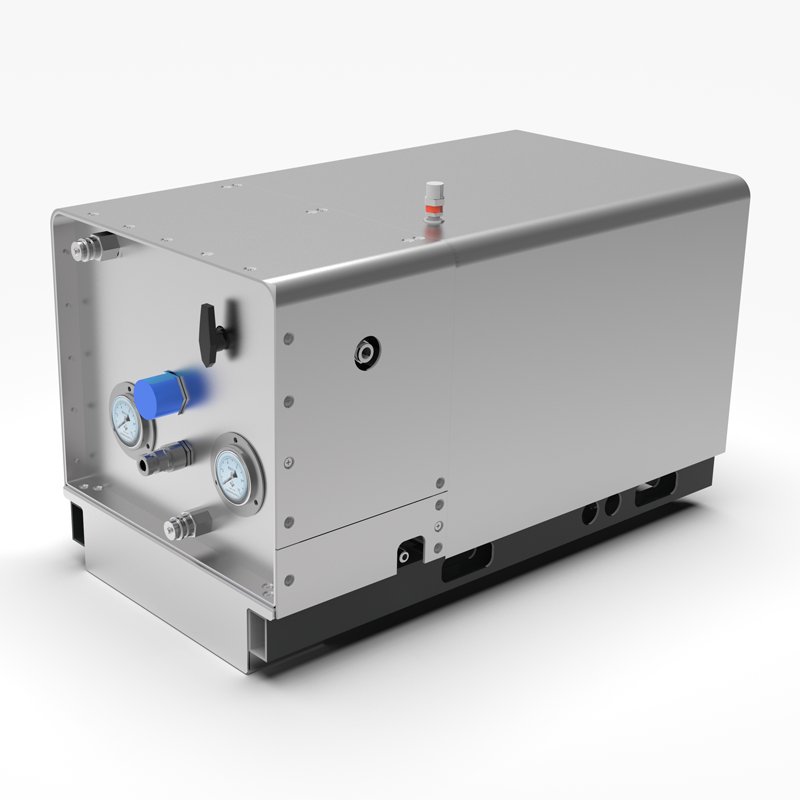
Where a project needs a practical reference point, review the available Medium hydrogen storage unit alongside its confirmed interface information and project-specific requirements. The product link is a starting point for technical discussion, not evidence of a particular capacity, certification, or suitability claim.
Make the final decision on verified operating evidence
The right hydrogen solid form solution is the one that delivers the required hydrogen safely and repeatably within the real site boundary. Before purchase, turn the comparison into an acceptance protocol that specifies usable capacity, flow profile, thermal conditions, alarms, shutdown behavior, inspection points, and documentation. This approach gives industrial teams a defensible basis for balancing density, safety, integration effort, and lifecycle performance.