 EN
EN

Green Hydrogen Generation: How AEM Electrolysis Fits Industrial Decarbonization
For industrial teams, green hydrogen generation is not simply a choice of electrolyzer. It is a system decision that joins electricity procurement, water treatment, compression, storage, hydrogen demand and plant operations. The useful starting point is therefore not “Which technology is appropriate?” but “Which operating conditions must the project satisfy?”
Green hydrogen is made when water electrolysis is supplied with renewable electricity. The climate result is conditional: the U.S. Department of Energy notes that hydrogen produced through electrolysis can result in zero greenhouse-gas emissions depending on the electricity source. That distinction matters for industrial decarbonization. A low-carbon electrolyzer on a carbon-intensive or poorly matched power supply is not the same as a well-designed green-hydrogen system.
Within this landscape, an anion exchange membrane (AEM) electrolyzer is attracting attention as a possible bridge between established alkaline approaches and proton exchange membrane systems. An industrial hydrogen generator based on AEM technology may be relevant where a project needs modularity, renewable-power compatibility and a disciplined evaluation of material, balance-of-plant and operating requirements.
Start with the green hydrogen value chain, not the electrolyzer stack
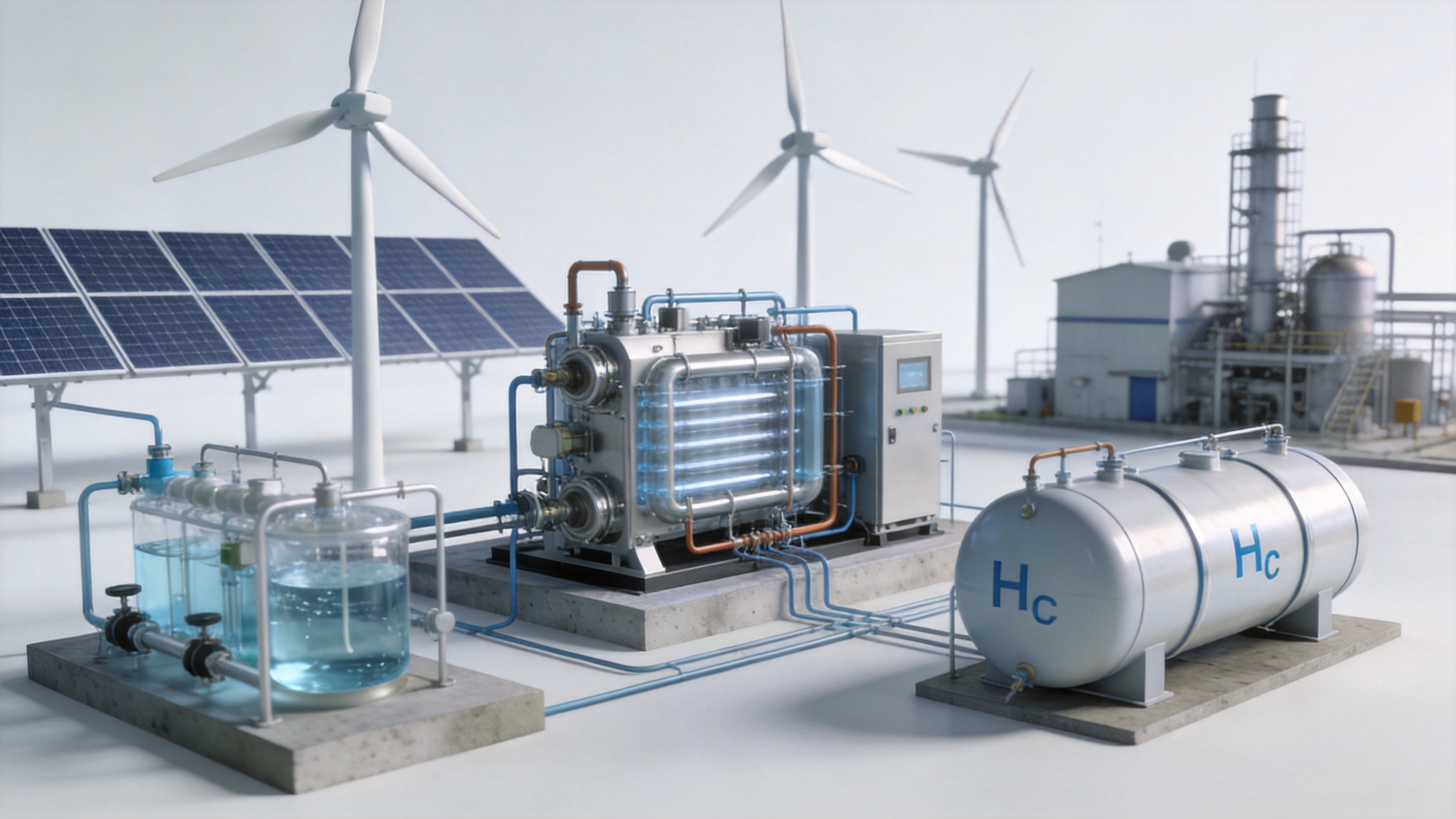
A practical green hydrogen generation assessment begins with the full value chain. Renewable electricity is converted into direct current; purified water enters the electrolyzer; hydrogen is dried, compressed or buffered; and the product is delivered to an end use such as refining, chemicals, mobility, heat, power balancing or energy storage. Each interface can change project economics and emissions performance.
For example, a site with variable wind or solar output needs a clear plan for operating windows, ramping, curtailment and hydrogen buffering. A site with a steady industrial offtake needs to define purity, pressure and delivery reliability before selecting equipment. These are not minor engineering details. They determine whether green hydrogen generation is being evaluated as an energy asset, a process-gas supply system, or both.
Existing demand also provides context. International Energy Agency reporting has consistently shown that hydrogen use remains concentrated in established industrial uses, especially refining and chemical production. For these sectors, the decarbonization question is often how to substitute or supplement current hydrogen supply while preserving safe, dependable operations.
What makes AEM electrolysis different?
AEM electrolysis uses an anion-conducting membrane to separate the hydrogen and oxygen sides of the cell. In broad terms, it aims to combine some operational characteristics associated with compact membrane-electrolyzer designs with the potential to use non-precious transition-metal catalysts. Reviews of AEM water electrolysis identify that catalyst pathway as a potential advantage over systems that rely more heavily on traditional noble-metal electrocatalysts.
That does not make AEM a universal answer. Membrane durability, catalyst stability, electrolyte strategy, water quality, thermal management and real operating profiles all need project-specific validation. A comparison based only on headline efficiency or catalyst type can miss the conditions that determine availability over time.
For industrial decarbonization teams, the right interpretation is measured: AEM may widen the set of viable green hydrogen generation architectures, especially for modular projects, but the final fit depends on verified performance at the planned duty cycle and integration point.
How to assess AEM for an industrial decarbonization project
1. Define the emissions boundary
Document the electricity source, procurement method, expected operating profile and any storage or grid interaction. This makes the emissions case auditable and prevents a technology comparison from being separated from the power-supply reality.
2. Map the hydrogen demand profile
Identify hourly, daily and seasonal demand, required pressure and purity, critical loads, and permitted supply interruptions. A project with flexible offtake can value different operating characteristics from a project replacing continuous process hydrogen.
3. Evaluate system interfaces
Assess water treatment, power conversion, cooling, gas handling, compression, safety systems and storage together. In many projects, balance-of-plant choices influence cost and operability as much as the stack itself. Before comparing equipment, make the application boundary explicit.
4. Validate the operating case
Ask suppliers to relate performance information to the intended load profile rather than only to nominal conditions. Confirm what operating assumptions, maintenance plans and site utilities are included in the scope. A technology decision is more reliable when the supplier conversation is anchored in actual duty-cycle requirements.
Where modular AEM systems can fit
Modular capacity can help teams phase a project as renewable supply, hydrogen offtake and site infrastructure mature. Hyto Energy lists 100KW-500KW and 1MW-5MW product categories for project teams reviewing scalable hydrogen-production capacity. The appropriate capacity is not implied by the category name alone; it should be matched to verified demand, renewable availability and downstream handling requirements.
For an industrial hydrogen generator project, staged deployment can also make it easier to align equipment procurement with electrical interconnection, storage commissioning and customer offtake milestones. Whether that flexibility is valuable depends on the project schedule and the cost of underutilized assets.
Questions to take into a technical review
- What renewable-electricity profile will support green hydrogen generation, and how will it be evidenced?
- What hydrogen flow, pressure, purity and availability does the end use require?
- What water-quality and thermal-management conditions are assumed?
- How will AEM stack performance be validated at expected partial-load and cycling conditions?
- Which balance-of-plant components are included, and who owns integration responsibility?
- What storage or compression strategy protects the industrial process when renewable generation changes?
The practical takeaway
AEM electrolysis belongs in the industrial decarbonization conversation because it offers another route for designing renewable-powered hydrogen systems. Its value is not a blanket promise of lower cost or superior performance. It is the opportunity to evaluate a different technology architecture against the real conditions of a site.
For green hydrogen generation, the strongest projects connect renewable electricity, operational load, water, electrolysis, storage and offtake in one assessment. When those boundaries are clear, AEM can be compared fairly with other electrolyzer options and industrial teams can move from broad ambition to an evidence-based deployment plan.